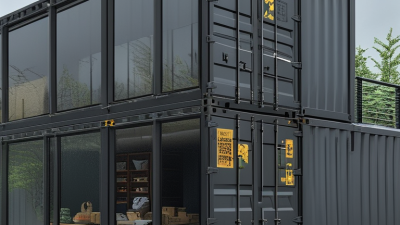
Why Choose Shipping Container Self Storage?
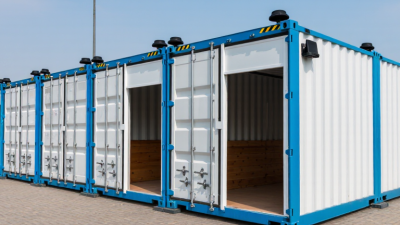
Why choose shipping container self storage when traditional units already exist? The answer often begins with flexibility. A steel container can sit beside a workshop, farm building, or active construction site. It creates useful space without requiring a permanent extension. That matters when stock levels change quickly or building plans remain uncertain.
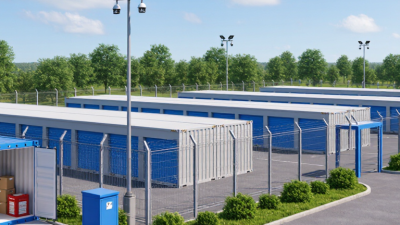
Shipping container self storage also offers practical security. Heavy steel walls, a weather-resistant roof, and a quality lockbox provide a strong physical barrier. Proper drainage and ventilation help protect furniture, tools, documents, and boxed inventory from moisture. However, the container alone is not a complete security plan. Good lighting, controlled access, camera coverage, and careful site placement still matter.
Industry consultant James O. Davies describes the principle clearly: “Security begins with placement, not just the lock.” His observation reflects real operational experience. A container hidden behind poor fencing may create avoidable risks. A visible, well-managed site usually supports better oversight.
There are limits, too. Interior temperatures can change sharply during hot afternoons and cold nights. Sensitive goods may need insulation, shelving, or climate-controlled storage instead. Access can also become awkward when containers are packed tightly together. These details deserve honest consideration.
For lawful household, commercial, and project storage, shipping container self storage can provide durable, scalable capacity. It is not perfect. Yet, with sensible planning, regular inspections, and responsible site management, it can be a practical alternative to conventional storage units.
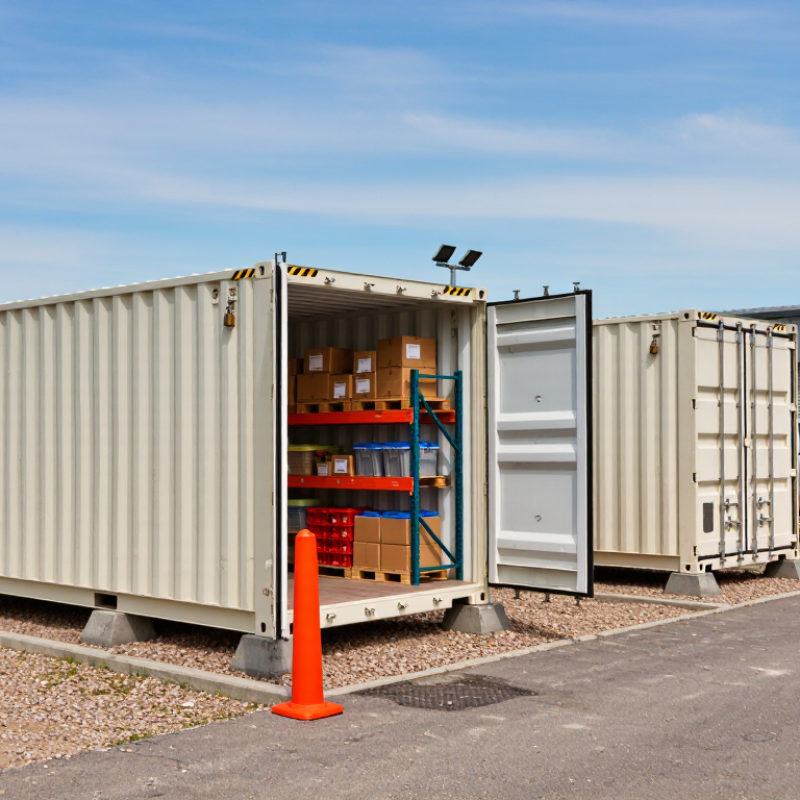
Container Self Storage Defined: ISO 668 Sizes and Usable Capacity
Shipping container self-storage works best when size is measured beyond the advertised length. ISO 668 classifies standard container dimensions, including 20-foot and 40-foot units. A 20-foot container usually measures about 6.06 metres externally and offers roughly 33 cubic metres internally. A 40-foot unit provides close to 68 cubic metres.
High-cube containers add about 30 centimetres of internal height. That extra space helps with tall shelving, bicycles, cabinets, and stacked cartons. However, usable capacity is always lower than the calculated volume. Door frames, wall ribs, flooring, and safe access reduce the practical storage area. A realistic working capacity may be 28 to 30 cubic metres for a 20-foot unit, depending on packing.
A simple volume calculation can mislead. From site inspections, I have found that narrow aisles often matter more than empty air above boxes. Leave a clear path near the doors. Use uniform shelving, label every container, and keep heavier items low. Moisture control also deserves attention, especially when storing furniture or paper records. Ventilation may help, but it does not replace dry, sealed packaging. Container condition varies. Inspect door seals, floors, locking bars, and visible corrosion before choosing a unit. Small details matter. A slightly larger container may prove cheaper than damaged goods, wasted handling time, or an unusable corner.
Space Efficiency Compared: 20-Foot Units Versus Standard Storage Lockers
Why Choose Shipping Container Self Storage?
When comparing space efficiency, a 20-foot shipping container can hold far more than a standard storage locker. Its internal floor area is usually about 145 square feet, with nearly eight feet of height. A typical locker may offer only 10 to 50 square feet. That difference becomes obvious when storing furniture, tools, seasonal equipment, or several packed boxes.
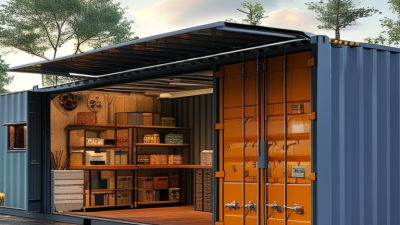
A container also provides one ground-level loading space. You can move a sofa through the wide doors without using stairs, lifts, or narrow corridors. Shelving along both sides can create a simple aisle, while stackable boxes use the upper space. In my storage planning experience, this layout reduces wasted corners. Still, poor stacking quickly creates an awkward wall of belongings.
Standard lockers can be better for small quantities and frequent access. They may suit documents, clothing, or a few household items, especially when you need only a compact area. However, their limited height and door size often force careful packing. I once assumed a smaller locker would be easier to manage, but searching through tightly packed boxes became frustrating. A container needs ventilation checks, moisture protection, and sensible organization. Without those habits, its extra capacity can encourage clutter rather than efficiency.
Why Choose Shipping Container Self Storage? - Space Efficiency Compared: 20-Foot Units Versus Standard Storage Lockers
Comparison uses nominal dimensions. Actual internal dimensions, usable volume, door sizes, and permitted storage loads may vary by facility, unit design, insulation, and local regulations.
| Storage Metric |
20-Foot Shipping Container |
Standard Storage Locker |
| Typical unit format |
One nominal 20-foot container |
Common 5 ft × 5 ft locker; a 5 ft × 10 ft unit is also shown for scale |
| External footprint |
20 ft × 8 ft = 160 sq ft
Approx. 18.29 m × 2.44 m = 14.86 m² |
5 ft × 5 ft = 25 sq ft
Approx. 2.32 m² |
| Typical internal floor area |
About 148 sq ft
Approx. 13.75 m² |
About 25 sq ft
Approx. 2.32 m² |
| Typical internal height |
About 7 ft 10 in
Approx. 2.39 m |
About 8 ft
Approx. 2.44 m; varies by facility |
| Approximate storage volume |
About 1,170 cu ft
Approx. 33.1 m³ |
About 200 cu ft
Approx. 5.66 m³ |
| Floor-area capacity comparison |
Approximately 5.9 times the floor area of a 5 ft × 5 ft locker |
Baseline comparison |
| Volume comparison |
Approximately 5.9 times the volume of a 5 ft × 5 ft locker |
Baseline comparison |
| Equivalent 5 ft × 5 ft lockers by floor area |
Roughly six lockers |
One locker per 25 sq ft of floor area |
| Suitable storage profile |
Furniture, appliances, business inventory, tools, equipment, and contents of a multi-room home |
Boxes, seasonal items, documents, small personal belongings, and limited household goods |
| Space-efficiency consideration |
Large continuous floor area with substantial vertical stacking potential |
Compact footprint, but limited floor area can require tighter packing and more frequent rearrangement |
Cost Analysis Using Yardi Matrix Rental and Occupancy Benchmarks
Shipping container self-storage can reduce construction time and support flexible site expansion. A converted 8-by-20-foot container provides a clear, physical rental product. However, the financial case depends on local rents, occupancy, land costs, and preparation expenses.
Yardi Matrix’s 2024 self-storage benchmarks showed national occupancy near 92%, while asking rents faced modest year-over-year pressure. That matters. A project cannot rely on full occupancy during its first months. For example, at a 90% occupancy rate, ten containers produce only nine occupied units on average. If monthly rent reaches $150, gross monthly revenue equals about $1,350 before security, insurance, maintenance, taxes, and financing. Industry reports from the Self Storage Association also show strong demand near dense housing and employment centers. Yet container sites may earn less when access feels narrow, hot, or inconvenient. The benchmark is useful, not a promise.
Tips: Compare projected container rent with nearby conventional units. Include gravel, drainage, gates, lighting, insulation, and delivery costs. Test the model at 80%, 90%, and 95% occupancy. That uncomfortable middle case may be the most realistic. Review local planning rules before ordering containers, because approval delays can erase the speed advantage. Experienced operators should also track move-ins, move-outs, delinquency, and achieved rent monthly. Advertised rent is not always collected rent.
Security and Durability Based on ISO Container Construction Standards
Why Choose Shipping Container Self Storage?
Shipping container self storage offers security built around ISO container construction standards. These standards support consistent dimensions, strong corner posts, and reinforced steel frames. In practical use, the corrugated walls resist impacts better than many lightweight storage sheds. Weather-resistant doors and raised flooring also help protect belongings from rain, dust, and ground moisture. I have seen a well-maintained container remain reliable through heavy wind and seasonal temperature changes. Still, steel is not maintenance-free. Small scratches can become rust spots if ignored.
A secure site should add more protection. Look for controlled access, lighting, camera coverage, and stable ground conditions. A quality lock matters, but the surrounding facility matters too. ISO-based construction provides a strong foundation, not complete security by itself. Regular inspections can reveal damaged seals, blocked vents, or water collecting beneath the unit. These details are easy to miss. That is where many storage problems begin.
Tips: Choose a container with clear inspection records and visible structural integrity. Check door seals before storing sensitive items. Keep boxes raised from the floor and leave a small air gap around the walls. Avoid packing the unit too tightly, because poor airflow may encourage condensation. Ask how often the site checks locks, drainage, and corrosion. A quick inspection now can prevent an expensive repair later.
Why Choose Shipping Container Self Storage?
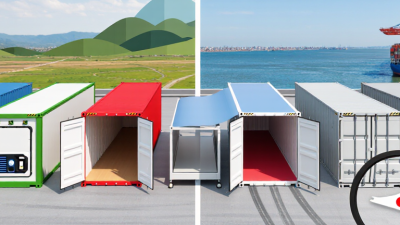
ISO-standardized container dimensions support predictable placement, efficient space planning, and compatibility with certified corner fittings and handling equipment. The chart shows nominal external dimensions for common standard dry-freight containers under ISO 668.
Standardized steel container construction provides a consistent enclosure for storage, while actual security and service life depend on container condition, locks, site controls, weather exposure, and maintenance.
Environmental Value Measured Through Container Reuse and CSC Certification
Shipping container self storage gives a used steel box another working life. That matters environmentally. UNCTAD’s Review of Maritime Transport 2024 states that more than 80% of global merchandise trade moves by sea. Many containers already travel thousands of miles before retirement. Reusing one for storage can delay dismantling, remanufacturing, and the emissions linked to producing replacement materials.
The structure also has measurable credibility. The International Convention for Safe Containers requires inspection and certification under the CSC system. A valid CSC plate confirms structural safety, not environmental performance. It indicates that the container has passed prescribed examinations and can handle international transport conditions.
For storage operators, checking the plate, inspection date, doors, flooring, and corrosion is essential. Small details matter.
Steel remains highly recoverable. World Steel Association’s Steel Facts 2024 reports about 680 million tonnes of steel are recycled globally each year. Reuse can preserve the container before that recycling stage, extending the value of embedded steel. Yet the environmental benefit is not automatic.
Long-distance transport, repainting, insulation, and concrete foundations can increase impacts. A 2024 lifecycle assessment using ISO 14083 methods would offer a clearer comparison than a simple “green” claim. The honest answer is less polished, but more reliable. A reused, CSC-certified container with minimal modification often makes practical environmental sense.