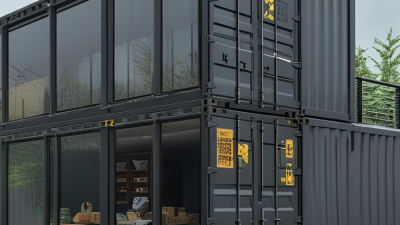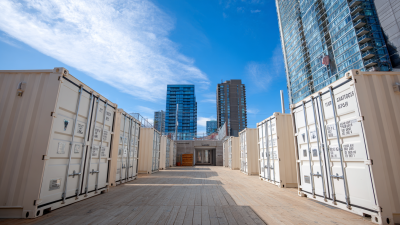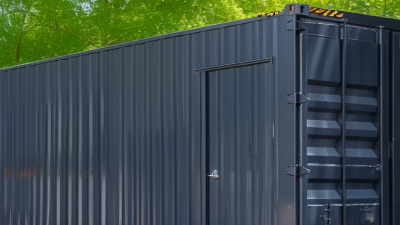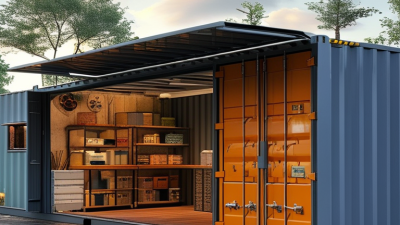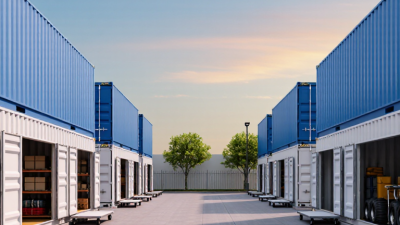
China’s manufacturing depth has made it a major source of shipping container storage units for farms, construction sites, retailers, and industrial facilities. However, supplier comparisons require more than factory size or attractive online prices. A dependable unit should show sound corner castings, weather-resistant doors, treated flooring, ventilation options, and consistent internal dimensions. Delivery planning matters too. A perfect container that arrives late is not a perfect solution.
UNCTAD’s Review of Maritime Transport 2023 recorded approximately 855 million TEU in global container-port throughput during 2022. That scale reflects continuing demand for durable, movable storage equipment. Drewry’s Container Forecaster also highlights how fleet growth, repositioning, and trade-route disruption influence container availability and pricing. Meanwhile, Container xChange market reports emphasize the importance of transparent pricing and equipment condition when buyers compare suppliers. These reports do not rank Chinese manufacturers directly, but they provide useful market context.
Christian Roeloffs, co-founder and CEO of Container xChange, has emphasized, “Transparency is essential in the container market.” That principle guides this China Top 10 evaluation. The list considers manufacturing experience, ISO-related production practices, customization capability, inspection procedures, export support, warranty terms, and customer feedback. It also separates new, one-trip units from used containers, because the difference affects appearance, corrosion risk, and service life. The ranking is not perfect. Supplier data changes quickly, and online claims still require verification. Buyers should request photographs, specifications, inspection records, and a landed-cost quotation before choosing a partner.
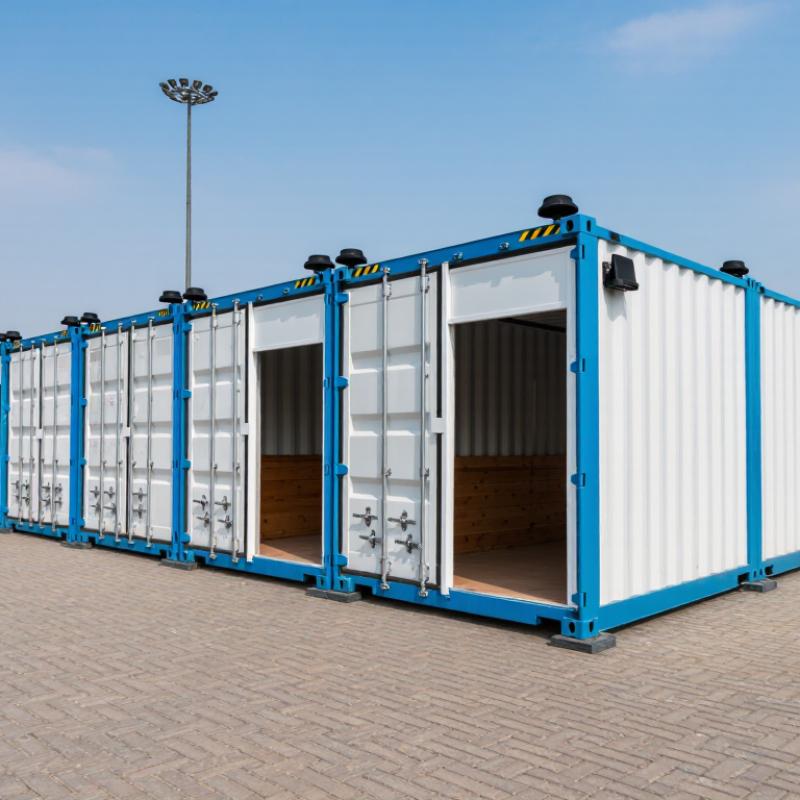
When comparing China’s top 10 shipping container storage unit suppliers, ISO 668 dimensions provide a practical starting point. A standard 20-foot container measures about 6.058 meters long, 2.438 meters wide, and 2.591 meters high externally. The 40-foot benchmark extends to approximately 12.192 meters, while width and height remain similar.
These figures describe nominal external dimensions, not usable storage space. Internal length, wall thickness, door openings, and corner fittings can differ slightly between production batches. In field inspections, I would check the internal length with a tape, then verify door clearance with the intended equipment. A forklift may fit inside, yet turning space can remain inadequate. That detail is often missed.
Reliable suppliers should provide dimensional drawings, steel specifications, tare weight, and inspection records. Ask whether measurements follow ISO 668 references or only a local workshop standard. A 20-foot unit suits compact storage areas and easier relocation. A 40-foot unit offers greater capacity but needs stronger ground preparation and wider access routes. High-cube models add height, but they are not the same benchmark and should be assessed separately.
Supplier claims deserve verification. Coating thickness, floor condition, weld quality, and roof drainage affect service life more than photographs suggest. I have seen clean-looking units conceal uneven floors or poorly aligned doors. My own assessment can still be imperfect, especially when tolerances are not documented. A third-party inspection is sensible for larger orders, particularly when several suppliers appear identical on paper.
China’s top 10 shipping container storage unit suppliers should be judged by capacity, export reach, and CSC certification, not factory size alone. The UNCTAD Review of Maritime Transport 2024 recorded about 12.3 billion tons of seaborne trade in 2023. That demand keeps container equipment moving through major Chinese ports. For buyers, annual output, available stock, and loading capacity matter more than impressive showroom figures.
A practical supplier review should compare verified production records, steel specifications, welding controls, and delivery performance. Export reach includes port access, inland transport, documentation accuracy, and after-sales inspection support. CSC approval is essential for containers used in international shipping. Buyers should check the CSC safety plate, approval number, inspection date, and certification scope. The CSC Convention normally requires periodic examination at intervals not exceeding 30 months. A certificate copy alone may be insufficient. Physical details matter.
Tips: Request a recent factory audit, production capacity evidence, and sample inspection photographs. Compare actual monthly output with promised annual capacity. The World Shipping Council and UNCTAD both highlight equipment availability as a factor in supply-chain reliability. Still, a top-ten ranking can mislead. Capacity figures may be self-reported, and export records can change quickly. I would also inspect door seals, corner castings, floor condition, and paint thickness before payment. Small defects become expensive at distant ports.
China’s top ten shipping container storage unit suppliers should be judged by product fit, not advertising alone. Dry containers suit tools, furniture, and boxed inventory. Check door seals, floor strength, corner posts, and visible rust before purchase. A clean 20-foot unit usually offers practical capacity for small warehouses or construction sites.
Reefer containers provide insulated storage with temperature control. They may suit food-grade materials, medicines, or heat-sensitive equipment, but power consumption matters. Ask for compressor records, temperature ranges, insulation condition, and alarm testing. Modified containers can include windows, ventilation, shelving, lighting, or personnel doors. Their quality depends on welding, drainage, wiring, and finish details. Flat-pack containers reduce transport volume and assemble quickly. However, weak installation can create leaks or unstable walls. Site measurements must be accurate.
Tips: Request inspection photos, steel grades, load information, warranty terms, and delivery records. Compare at least three written quotations. Visit a production facility when possible. Small details matter. A useful supplier should explain limitations clearly, not promise everything. I would also test a sample unit during rain and temperature changes. This step takes time, but it can reveal problems that photographs hide. Even a well-ranked supplier may deliver inconsistent batches, so independent inspection remains worth considering.
| Rank | Anonymized Supplier Profile | Typical Production Cluster | Primary Unit Types | Common Sizes | Typical External Dimensions | Typical Features | Indicative MOQ | Indicative Lead Time | Best-Fit Applications |
|---|---|---|---|---|---|---|---|---|---|
| 1 | Profile A — High-Volume Dry Container Specialist | Coastal East China | Dry, modified dry | 20 ft, 40 ft, 40 ft high-cube | 6.06 × 2.44 × 2.59 m for 20 ft; 12.19 × 2.44 × 2.90 m for 40 ft high-cube | Corten-steel shell, cargo doors, plywood floor, ventilation options, lockboxes | 1–5 units | 20–35 days | General storage, construction materials, equipment protection |
| 2 | Profile B — Refrigerated Storage Specialist | South China coastal manufacturing zone | Reefer, insulated modified units | 20 ft reefer, 40 ft high-cube reefer | 6.06 × 2.44 × 2.59 m for 20 ft; 12.19 × 2.44 × 2.90 m for 40 ft high-cube | Insulated panels, powered refrigeration system, temperature control commonly around −25°C to +25°C | 1 unit | 30–60 days | Cold storage, food logistics, pharmaceuticals, temperature-sensitive goods |
| 3 | Profile C — Flat-Pack Modular Unit Manufacturer | Yangtze River Delta | Flat-pack, modular storage rooms | 3 m, 6 m, 12 m modules | Common module width about 2.44 m; height commonly 2.59–2.90 m | Knock-down panels, bolt-together frames, insulated wall options, rapid assembly | 1–3 sets | 15–30 days | Temporary warehouses, project camps, retail storage, emergency facilities |
| 4 | Profile D — Modified Container Conversion Specialist | Central coastal China | Modified dry, office-storage, workshop units | 20 ft, 40 ft, 40 ft high-cube | ISO footprints: 6.06 × 2.44 m or 12.19 × 2.44 m | Personnel doors, windows, electrical wiring, shelving, partitions, insulation | 1 unit | 25–45 days | Site offices, workshops, secure archives, tools and spare-parts storage |
| 5 | Profile E — Heavy-Duty Industrial Storage Supplier | Northern China industrial belt | Dry, reinforced, open-side modified units | 20 ft, 40 ft | 6.06 × 2.44 × 2.59 m or 12.19 × 2.44 × 2.59 m | Reinforced flooring, lifting pockets, wide openings, anti-corrosion coating | 1–5 units | 25–40 days | Machinery parts, metal products, heavy tools, industrial inventory |
| 6 | Profile F — Agricultural and Food Storage Supplier | South-central China | Dry, reefer, ventilated modified units | 20 ft, 40 ft high-cube | 6.06 × 2.44 × 2.59 m or 12.19 × 2.44 × 2.90 m | Air vents, washable surfaces, insulation, temperature monitoring options | 1 unit | 25–50 days | Farm supplies, packaged food, produce, seasonal inventory |
| 7 | Profile G — Retail and Self-Storage Unit Supplier | Eastern China manufacturing corridor | Modified dry, partitioned storage units | 10 ft, 20 ft, 40 ft | 10 ft units commonly about 3.05 × 2.44 m; 20 ft units about 6.06 × 2.44 m | Multiple compartments, roll-up doors, ventilation, security locks, external paint options | 1–3 units | 20–40 days | Self-storage parks, retail backrooms, household storage, urban logistics |
| 8 | Profile H — Export-Oriented Flat-Pack Supplier | Southern coastal China | Flat-pack, knock-down, insulated modules | 3 m, 6 m, 9 m, 12 m configurations | Standard shipping width around 2.44 m; module length varies by project design | Compact shipping volume, galvanized frames, insulated panels, quick installation | 1 set | 15–35 days | Remote sites, disaster response, temporary distribution centers |
| 9 | Profile I — Secure Document and Equipment Storage Supplier | East China fabrication center | Modified dry, fire-resistant and secure units | 10 ft, 20 ft, 40 ft high-cube | Common ISO widths of 2.44 m; heights of 2.59 m or 2.90 m | Access control, reinforced doors, fire-rated lining options, shelving, lighting | 1 unit | 30–50 days | Records, electronics, confidential materials, high-value tools |
| 10 | Profile J — Project-Based Custom Container Supplier | Multi-region China sourcing network | Dry, reefer, modified, flat-pack | 10 ft, 20 ft, 40 ft, 40 ft high-cube | Typical ISO lengths of 3.05 m, 6.06 m, or 12.19 m; width about 2.44 m | Mixed-unit sourcing, custom layouts, branding-free finishes, delivery coordination | 1–10 units | 25–60 days | Large projects requiring several container types and coordinated delivery |
When comparing China’s top ten shipping container storage unit suppliers, focus on engineering evidence, not catalogue photos. Corten steel resists atmospheric corrosion and develops a protective patina, but it is not maintenance-free. Check steel grade, plate thickness, weld quality, and drainage around the floor. ISO 668:2020 defines key container dimensions, while the CSC Convention requires approved units to carry valid safety certification. These documents matter more than a polished sales claim.
A 28,000-kg payload sounds strong, yet payload depends on tare weight and maximum gross mass. For many standard 20-foot units, ISO limits commonly reach 30,480 kg gross, leaving less usable capacity than expected. Ask each supplier for tested load paths, floor deflection data, and corner-post calculations. Wind loads also deserve close attention. UNCTAD’s Review of Maritime Transport 2024 reports that over 80% of global merchandise trade by volume moves by sea, exposing equipment to repeated storms, salt air, and handling impacts. Suppliers should provide site-specific wind calculations, anchoring details, and test references aligned with ISO 1496-1 or applicable structural standards.
Small details matter. A door can bind after frame distortion. Paint can hide early rust. I would reject any comparison based only on payload. The weak point is often installation, not steel. unerquicklich
China Top 10 Shipping Container Storage Units Suppliers?
When comparing China’s leading storage-unit suppliers, MOQ should match your trial risk. Many factories accept one customized unit, while container-based projects may require five to ten units. Ask whether the MOQ includes painting, insulation, shelving, and inspection. A low quoted MOQ can hide setup fees. That matters.
Lead time needs written milestones. Standard units may ship within 20–35 days, while modified units often require 40–60 days. Confirm drawing approval, production photos, loading date, and spare-part availability. UNCTAD’s Review of Maritime Transport 2024 reported that container ship capacity grew 8.6% in 2023. More capacity does not guarantee stable delivery, especially during port congestion or route changes.
Incoterms must fit your logistics experience. Under FOB, the buyer controls ocean freight after loading. Under CIF, the seller arranges freight and insurance, but destination charges remain uncertain. Compare both offers using the same container size and discharge port. Drewry’s World Container Index recorded about $3,905 for a 40-foot container on June 6, 2024, showing why old quotations can mislead. Check weekly Freightos Baltic Index data before signing. Request a validity period of seven days, not one month. I would also verify cargo weight, packing dimensions, and demurrage responsibility. Some supplier comparisons still overlook these details. Mistakes happen.