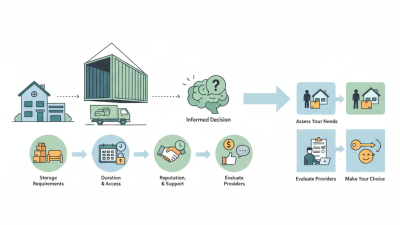
Choosing container self storage in 2026 requires more than comparing monthly prices. A suitable unit should protect your belongings, fit your access needs, and remain practical throughout the rental period. This guide explains how to assess container quality, site security, ventilation, drainage, insurance, and contract terms before making a decision.
Measure everything carefully. A standard container may hold furniture, tools, seasonal equipment, or business stock, but internal space can feel smaller than expected. Leave room for walking between boxes. Check the door opening, floor condition, and container height. Ask whether the site uses ground-level placement, because lifting heavy items can create unnecessary cost and risk.
Security matters daily. Look for controlled entry, visible lighting, working cameras, perimeter fencing, and clear staff procedures. Read recent customer reviews, but do not trust them blindly. Online photos may show an ideal day. Visit the facility if possible, and inspect water marks, rust, condensation, and the surrounding ground after rain.
Think beyond the first month. Confirm access hours, notice periods, payment changes, cancellation rules, and available vehicle space. Ask how the provider handles damaged goods or urgent access problems. A cheaper option may become expensive when transport, insurance, or restricted entry is added. My own preference is simple: choose a clean, well-managed site with transparent terms, even if it costs slightly more. Still, no storage choice is perfect. Careful questions remain essential.
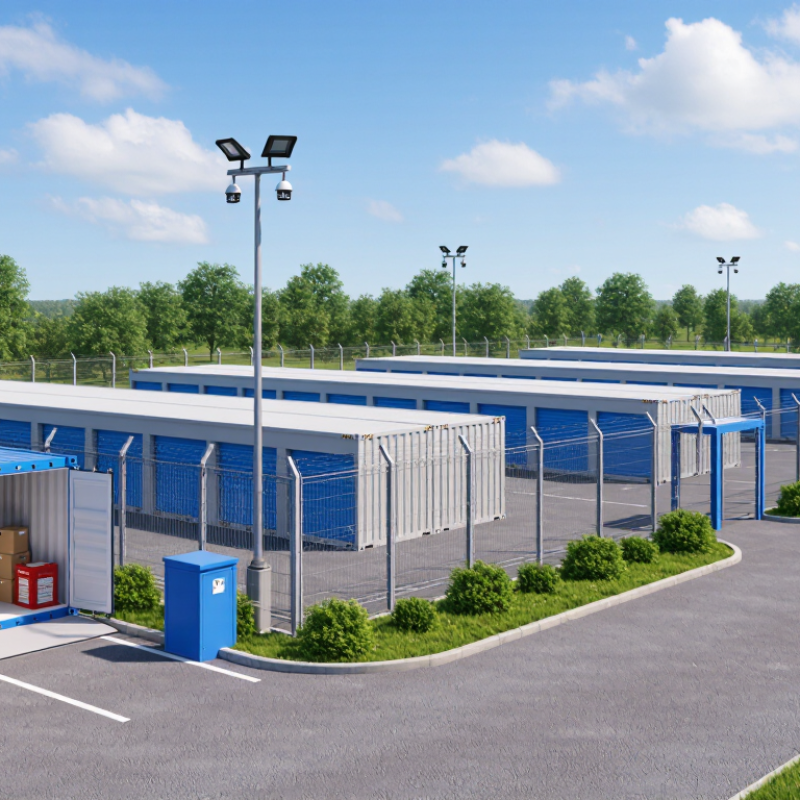
Container self-storage means storing belongings inside a steel shipping container. The container usually sits in a secure yard or on private land. Some operators deliver it to your property, while others keep it at a managed facility.
The process is straightforward. You load boxes, furniture, tools, or seasonal equipment into the container. A strong lock secures the doors, and access depends on the site’s schedule. In practical inspections, airflow and ground drainage matter more than attractive paint.
A container is not a magic climate-controlled room. Moisture can damage paper, fabrics, and untreated wood. Use pallets, desiccants, and space between walls and cartons. I still find this step frequently underestimated.
Demand helps explain the model’s growth. The Self Storage Association’s 2024 Demand Study reported that 12.6 million U.S. households used self-storage during 2023. The FEDESSA European Self Storage Annual Survey 2024 recorded more than 9,500 facilities across Europe.
These figures cover self-storage broadly, not containers alone. That distinction matters when comparing prices or availability. In 2026, compare container dimensions, ventilation, insurance terms, delivery charges, and access rules.
Ask whether the ground is paved or gravel. Check the lock design personally. A low monthly price may hide transport costs, restricted access, or weak moisture protection.
When selecting a unit, measure your largest item first. Guesswork often creates an expensive second move.
How to Choose Container Self Storage in 2026?
Choosing container self storage starts with an honest assessment of what you need to store. List every item, including awkward furniture, boxes, tools, and seasonal equipment. Measure large objects rather than guessing their size. My first estimate was wrong because I ignored walking space and door clearance. Leave room to reach frequently used items. It prevents unnecessary unloading later.
Compare your inventory with the container’s internal length, width, and height. External measurements can be misleading. A narrow doorway may block bulky furniture, even when the total capacity looks sufficient. Place heavier items low and near the front only if you access them often. Check the ground surface, drainage, ventilation, and protection from rain. Moisture damage is easy to underestimate. Some stored materials need more controlled conditions than a standard container provides.
Access requirements should influence the location as much as price. Confirm opening hours, vehicle routes, turning space, lighting, and loading equipment before booking. Visit the site if possible. A quick inspection often reveals steep entrances or cramped lanes that online photographs hide. Ask how access is recorded and how security checks are maintained. Review the agreement carefully, especially notice periods, insurance responsibilities, and restrictions on stored goods. Reliable operators should explain these details clearly and provide written information. I still prefer a simple floor plan and dated inventory, although I sometimes forget to update it after moving items.
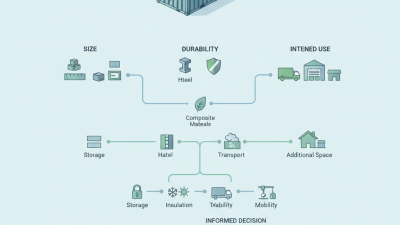
Assess your storage needs, available space, and access requirements before selecting a container size.
Suitable for smaller household contents, seasonal items, tools, or compact business inventory.
A practical choice for the contents of a smaller home, renovation storage, or regular inventory access.
Best for larger household moves, vehicles, bulky equipment, or high-volume commercial storage.
Access planning: common dry-container cargo doors are approximately 7 ft 8 in wide and 7 ft 5 in high. Allow extra clearance for loading equipment, turning space, and frequent aisle access. Dimensions and usable capacity vary by container design. Chart values are rounded planning benchmarks based on common ISO dry-container internal dimensions.
Choosing container self storage in 2026 starts with matching the container to your belongings, not the advertised price. Steel containers resist rain and pests, while insulated units reduce heat swings for furniture, electronics, and documents. A used container may cost less, but inspect floor damage, door alignment, rust, and previous repairs. Measure every large item before visiting. Leave walking space near doors and between fragile boxes. A 20-foot unit suits many household loads, while bulky equipment may require 40 feet. Published dimensions deserve a second look.
Compare features that affect daily access. Ground-level loading can save hours and reduce lifting injuries. Wide doors, interior lighting, ventilation, and a clean ramp matter more than decorative finishes. Ask whether access is scheduled, unrestricted, or limited by site hours. Photograph the unit’s condition during handover. It protects both sides. Security should include perimeter fencing, controlled entry, lighting, cameras, and a strong individual lock. Cameras help, but they do not replace regular human checks. Ask how staff record incidents and respond after closing.
I used to focus mainly on monthly price. That was a mistake. Compare the full twelve-month cost, including transport, access charges, insurance, and possible deposits. Read the agreement carefully. Confirm who handles leaks, condensation, pest control, and damaged seals. If possible, inspect the exact unit after rain. Dry walls and an intact rubber seal reveal more than a sales description. Trust your measurements, but question your assumptions. Future space needs can change faster than expected.
| Comparison Dimension | 8 ft Container | 10 ft Container | 20 ft Standard Container | 40 ft Standard Container | 40 ft High-Cube Container |
|---|---|---|---|---|---|
| Typical external dimensions | Approximately 8 ft long × 8 ft wide × 8 ft 6 in high | Approximately 10 ft long × 8 ft wide × 8 ft 6 in high | 20 ft long × 8 ft wide × 8 ft 6 in high | 40 ft long × 8 ft wide × 8 ft 6 in high | 40 ft long × 8 ft wide × 9 ft 6 in high |
| Typical internal floor area | About 56 sq ft | About 72 sq ft | About 146 sq ft | About 305 sq ft | About 305 sq ft |
| Typical internal volume | About 440 cu ft | About 570 cu ft | About 1,170 cu ft | About 2,390 cu ft | About 2,690 cu ft |
| Approximate usable capacity | Small furniture, boxes, tools, bicycles, or seasonal items | Contents of a studio or one-bedroom apartment | Contents of a two- to three-bedroom home or small business inventory | Contents of a large home, workshop, or substantial commercial inventory | Similar floor area to a 40 ft standard unit, with extra vertical storage space |
| Common door arrangement | One end-opening cargo door; exact opening varies by design | One end-opening cargo door; exact opening varies by design | Usually one end-opening cargo door; some units have additional side access | Usually one end-opening cargo door; side-door versions are also available | Usually one end-opening cargo door; side-door versions are also available |
| Typical maximum gross weight | Varies by unit specification; confirm the rating on the container plate | Varies by unit specification; confirm the rating on the container plate | Up to approximately 30,480 kg for many ISO-rated units | Up to approximately 30,480 kg for many ISO-rated units | Up to approximately 30,480 kg for many ISO-rated units |
| Space efficiency | High for small loads; minimizes unused space | Good balance between access and capacity | Efficient for household moves and regular inventory storage Most versatile | High capacity, but less efficient if only partly filled | High capacity plus additional vertical clearance |
| Access and handling | Easy to load manually; limited aisle space | Easy to organize with shelving or short storage rows | Suitable for pallets, moving boxes, shelving, and hand trucks | Requires careful layout planning because of the long internal distance | Requires careful layout planning; tall items need secure stacking |
| Best suited for | Students, compact storage, garden equipment, and document archives | Apartment contents, small renovations, and seasonal household goods | Home moves, business stock, machinery, and long-term self storage | Large relocations, warehouse overflow, and high-volume inventory | Bulky or tall goods, racking systems, and volume-sensitive storage |
| Weather protection | Weather-resistant steel enclosure with lockable doors; inspect seals and roof condition | Weather-resistant steel enclosure with lockable doors; inspect seals and roof condition | Weather-resistant steel enclosure; suitable for general goods when properly ventilated | Weather-resistant steel enclosure; check for roof leaks and door-seal wear | Weather-resistant steel enclosure; additional height may require extra condensation control |
| Ventilation considerations | Passive vents are useful for reducing condensation | Passive vents are useful for reducing condensation | Ventilation is recommended for furniture, textiles, and paper goods | Ventilation and airflow planning are especially important for long-term storage | Ventilation is recommended; avoid blocking upper vents with stacked items |
| Recommended security features | Hardened padlock, lockbox or shrouded hasp, site lighting, and access control | Hardened padlock, lockbox or shrouded hasp, site lighting, and access control | Lockbox, tamper-resistant hasp, perimeter fencing, CCTV, and controlled entry Strong baseline | Lockbox, tamper-resistant hasp, CCTV coverage, perimeter fencing, and monitored access | Lockbox, tamper-resistant hasp, CCTV coverage, perimeter fencing, and monitored access |
| Ground and placement requirements | Level, compacted ground with drainage and adequate door clearance | Level, compacted ground with drainage and adequate door clearance | Firm level base, delivery access, and sufficient turning space for handling equipment | Strong level base, wide delivery access, and substantial turning space | Strong level base, wide delivery access, and clearance for the higher unit |
| Main limitations | Limited capacity and smaller door-to-floor working area | May be too small for a full household move or large inventory | Less vertical clearance than a high-cube model; one access end can make retrieval slower | Higher cost and greater risk of unused space when only partly filled | May have higher handling requirements and is not necessary for ordinary-height goods |
| Selection guideline | Choose when the load is compact and easy access is more important than volume | Choose when a small household or renovation project needs more than a mini unit | Choose when flexibility, availability, and balanced capacity are priorities | Choose only after measuring the entire load and confirming delivery access | Choose when vertical clearance or higher-volume packing provides a clear benefit |
Important: Dimensions, door openings, payload ratings, ventilation, and security equipment vary by container condition and local regulations. Confirm the unit specification, site access, insurance requirements, and prohibited-item policy before booking.
Dimensions and capacity figures are typical approximations based on common ISO container formats; actual internal measurements may vary by manufacturer and structural design.
A reliable choice starts with the site, not the advertised monthly price. Visit after rain if possible. Look for standing water, soft ground, and blocked drainage. Check whether doors open smoothly and locking bars show heavy rust. Good ventilation matters, especially for furniture, tools, and paper records. Walk around the container. Note gaps, damaged seals, poor lighting, and signs of pests. Ask how often the site is inspected. Security cameras help, but they cannot replace secure access controls and clear visitor procedures.
Read the contract slowly. Confirm the rental period, notice requirements, deposit rules, late charges, and access hours. Check whether prices can change during the agreement. Some contracts include delivery, collection, administration, or lock fees separately. Ask who pays if the container must be moved. This detail is easy to miss. I once focused only on the monthly rate and overlooked a costly collection charge. That was poor planning.
Insurance needs equal attention. Ask whether your household or business policy covers stored goods off-site. If not, review the facility’s insurance option carefully. Check coverage limits, exclusions, deductibles, weather damage, theft conditions, and claim documents. Photograph the container and record valuable items before storage. Keep receipts in a separate location. Policies differ by region, so confirm requirements with a qualified insurance adviser. Some details may still remain unclear. Ask for written answers before signing.
Choosing a storage container starts with the items you need to protect. Measure bulky furniture, boxes, and equipment before selecting a unit size. Leave a narrow walkway inside. You will need it later. Check the container’s floor, roof, doors, seals, and ventilation openings during inspection. Uneven floors or damaged seals can cause moisture problems. Ask about ground drainage, access hours, lighting, security procedures, insurance, and rental changes. Clear answers indicate a more reliable storage arrangement.
Prepare items before loading them. Clean and dry everything, especially appliances, tools, and outdoor furniture. Use sturdy boxes with labels on two sides. Wrap fragile pieces, but avoid sealing moisture inside plastic. Place wooden pallets or raised supports beneath cartons. This improves airflow during damp weather. Create a simple inventory with photographs and location notes. My practical weakness is overestimating available space; measuring twice prevents an expensive reshuffle.
Load heavier items low and near the container’s center. Keep weight balanced from front to back. Do not press furniture against ventilation points or doors. Store frequently needed boxes near the entrance. Use straps to prevent movement, but do not crush cartons. Choose a weather-resistant lock and test it before leaving. Visit the container after heavy rain, then check for damp smells, leaks, pests, or shifted items. Update the inventory when anything moves. Small checks prevent larger surprises.