Top 10ft Storage Container Suppliers Worldwide
Choosing a reliable 10ft storage container supplier requires more than comparing online prices. Buyers must examine steel quality, weather resistance, delivery coverage, and after-sales support. A compact container may look simple, yet its performance depends on welds, door seals, ventilation, and floor treatment.
Marc Levinson, a respected containerization historian, observes, “The container made shipping cheap and reliable.” That idea still matters today. A dependable 10ft storage container should arrive with sound corner posts, functioning locking bars, and a floor suitable for the intended load. Small details matter.
This guide presents the Top 10ft Storage Container Suppliers Worldwide, focusing on manufacturers, distributors, and rental specialists with established market experience. The comparison considers product consistency, customization, regional availability, certifications, lead times, and customer service. Prices alone do not tell the full story.
Some suppliers offer new units with crisp paint and factory warranties. Others provide used containers with visible dents, faded markings, or repaired panels. That is not automatically a weakness. A carefully inspected used unit can serve well, but buyers should request photographs, inspection records, and clear delivery terms.
The ranking is not perfect. Supplier performance can vary by country, season, and local partner. Even a reputable company may deliver uneven results in a difficult market. Readers should verify dimensions, ground conditions, access clearance, and permitted use before ordering. A narrow driveway can defeat a good purchase.
These suppliers provide useful starting points for businesses, farms, construction teams, retailers, and households seeking secure, space-efficient storage. Practical evidence matters more than polished promises.
What Is a 10ft Storage Container?
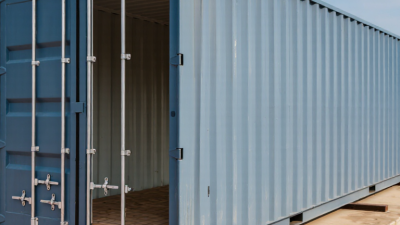
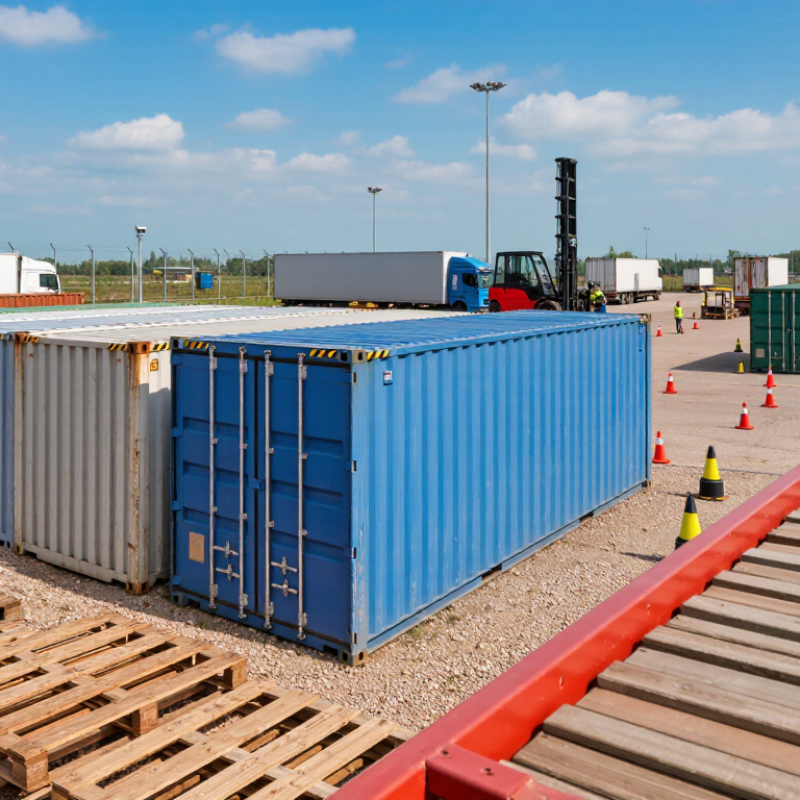
A 10ft storage container is a compact steel unit designed to protect equipment, furniture, tools, and inventory from weather and unauthorized access. Its external size is usually about 3.0 metres long, 2.44 metres wide, and 2.59 metres high. Internal capacity often reaches 15 to 16 cubic metres, although door frames and wall thickness reduce usable space. The exact measurements vary by manufacturer and construction year.
ISO 668 provides the dimensional framework for freight containers, but it does not make every 10ft unit identical. A well-maintained container normally has lockable steel doors, corner posts, ventilation openings, and a treated wooden floor. The CSC plate matters when the unit will be transported internationally.
For static storage, buyers should still inspect the floor, roof seams, door seals, and signs of corrosion. Small defects become expensive in wet climates.
Industry demand also supports this format. Grand View Research valued the global self-storage market at about USD 58.3 billion in 2023 and expects continued growth through 2030. UNCTAD’s Review of Maritime Transport 2024 records sustained expansion in global container capacity, reinforcing the importance of standardized equipment. These reports do not measure 10ft storage units directly, so precise market claims deserve caution. In practical use, one 10ft container can hold a small apartment’s contents, several pallets, or seasonal business stock. It is space-efficient, but not spacious. Shelving can improve access, while poor loading may waste nearly a quarter of the floor area.
Key Criteria for Evaluating Global Suppliers
Top 10ft Storage Container Suppliers Worldwide
Key Criteria for Evaluating Global Suppliers
A reliable 10ft storage container supplier should provide more than attractive photographs. Check the steel grade, frame thickness, door alignment, floor treatment, and roof seams. Ask for recent inspection records and clear product drawings. External dimensions can vary slightly, affecting placement in narrow yards or warehouse lanes.
Manufacturing consistency matters when several units arrive together. Review welding quality, corrosion protection, paint specifications, and floor load capacity. Containers should meet relevant international standards and local transport requirements. A serious supplier explains testing methods instead of hiding behind general claims. Request a sample unit when the project is large. Small details matter.
Delivery performance also deserves close attention. Compare production time, port handling, packaging, insurance, and destination charges. Confirm whether replacement parts and technical support are available after delivery. Supplier references can reveal missed deadlines that sales materials never mention. A low quotation may exclude essential costs. That mistake is common.
Evaluate communication, too. Can the supplier answer technical questions with measurements and documents? Are revisions recorded clearly? Payment protection and warranty terms should be written in plain language. I would not rely on a polished website alone. Even experienced buyers can overlook ventilation, drainage, or local access limits. The best evaluation combines factory evidence, independent checks, and realistic site planning.
Top 10ft Storage Container Suppliers Worldwide
Top 10ft Storage Container Suppliers Worldwide
The global market supports a broad network of 10ft storage container suppliers. UNCTAD’s Review of Maritime Transport 2024 recorded 12.3 billion tonnes of seaborne trade in 2023. That scale keeps container manufacturing, refurbishment, and repositioning active across major ports. However, 10ft units remain less common than 20ft and 40ft models. Availability can change quickly.
Reliable suppliers should provide exact external and internal dimensions, tare weight, payload, and delivery terms. A standard 10ft container is usually about 3.05 metres long and 2.44 metres wide. Internal clearance varies with flooring, wall panels, and door design. ISO 668 offers a useful reference for dimensional compatibility, but storage buyers should still inspect the actual unit. Photos are not enough.
Drewry’s Container Census and Leasing Annual Review 2024 estimated the global container fleet at roughly 53 million TEU in 2023. This large fleet supports used-container markets, yet age and maintenance quality differ sharply. Strong suppliers document roof condition, door seals, corner posts, ventilation, and previous repairs. Look for inspection records and clear corrosion grading. Delivery distance also matters; a cheaper unit may become expensive after inland transport and crane fees. I would not choose a supplier on price alone. That shortcut often overlooks uneven floors, stiff locking bars, or poor drainage. Small details matter.
Top 10ft Storage Container Suppliers Worldwide
Market-neutral benchmark of commonly published external dimensions for 10ft storage containers. Actual specifications may vary by supplier, container age, and local regulations.
A standard 10ft storage container is typically about 10 feet long, 8 feet wide, and 8.5 feet high, providing a compact footprint for residential, commercial, and construction-site storage.
How to Choose the Right Supplier for Your Needs
Top 10ft Storage Container Suppliers Worldwide
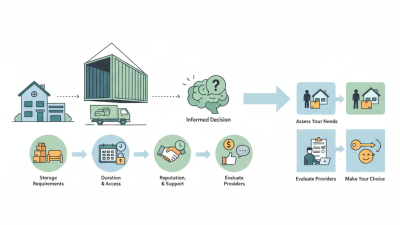
Choosing a 10ft storage container supplier requires more than comparing online prices. UNCTAD’s Review of Maritime Transport 2024 recorded approximately 858 million TEUs handled globally in 2023. That scale shows how important container supply chains and inspection systems have become. Ask suppliers where units were manufactured, stored, and repaired. A container with fresh paint may still have a weak floor or hidden corrosion.
Check dimensions against ISO 668 requirements, then request clear specifications. Confirm external and internal measurements, door clearance, roof condition, ventilation, and maximum payload. For used units, ask for dated photographs of the corners, underside, locking bars, and seals. Small details matter. A bent door frame can cause water entry during heavy rain. I have seen buyers focus on color and overlook warped flooring. That is an expensive mistake.
Supplier reliability also depends on documentation and delivery control. Request inspection records, material details, transport insurance, and certification under the applicable safety requirements. The International Convention for Safe Containers requires qualifying containers to pass safety examinations and carry valid plates. Compare landed cost, not just the quoted unit price. Include crane access, unloading space, local taxes, and delivery time. A cheaper supplier may create longer delays. Leave room for uncertainty, too. Stock photos, changing freight rates, and inconsistent terminology can distort a careful comparison.