
Why do global buyers choose Resin Insects when natural specimens, photographs, and digital models are widely available? The answer often combines visual appeal, durability, education, and responsible sourcing. A clear resin beetle can reveal wing structure, antennae, and body segmentation without fragile handling. It can sit on a classroom desk, museum display, or collector’s shelf for years.
The wider market supports this interest. Grand View Research’s 2024 Toys Market report estimates that the global toys market reached approximately USD 108.7 billion in 2023. Collectible products increasingly compete through detail, storytelling, and repeatable quality. Resin Insects fit this direction because manufacturers can reproduce distinctive forms consistently. Buyers can compare sizes, colors, finishes, and packaging before ordering. That consistency matters for international wholesale customers.
Education adds another reason. UNESCO’s Global Education Monitoring Report highlights the value of accessible, engaging learning materials. A resin model cannot replace field observation. It can, however, make insect anatomy easier to examine indoors. Children can rotate the piece under light and identify structures without touching a live specimen.
Sustainability still requires careful reflection. UNEP’s Global Resources Outlook 2024 warns that global resource extraction may rise substantially without better efficiency. Resin products therefore need responsible material selection, safer production, durable design, and transparent supplier information. Not every product meets these expectations. That is the uncomfortable part. Buyers should ask about resin composition, odor control, quality inspection, packaging waste, and production standards.
The appeal is practical.
It is also emotional.
Global buyers choose Resin Insects because they combine scientific curiosity with decorative value. Their decision becomes stronger when craftsmanship, documentation, and honest product claims support the purchase.
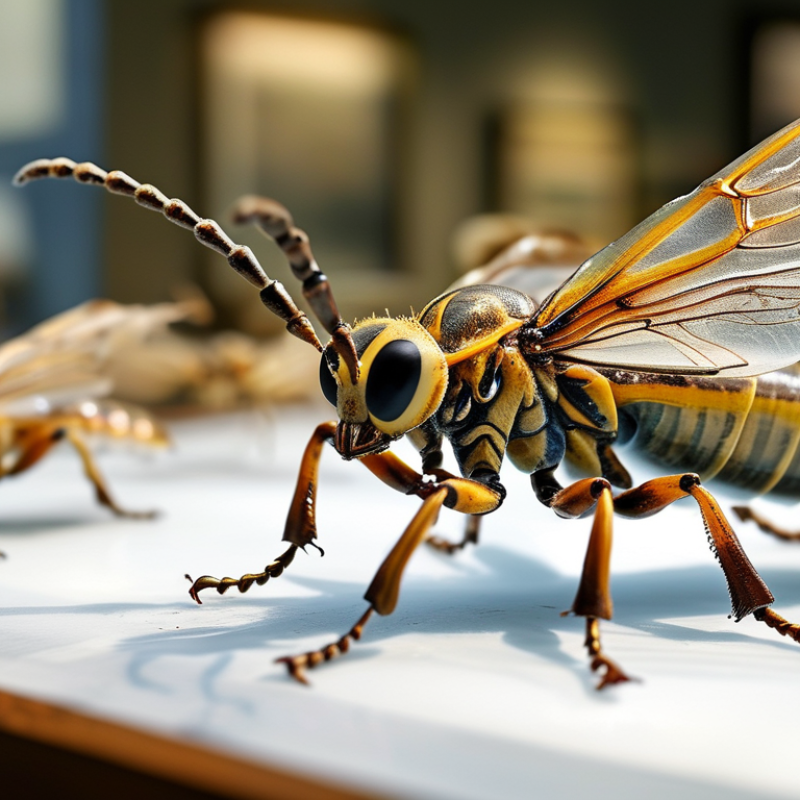
Resin insects are preserved specimens or detailed replicas sealed inside transparent casting resin. They display wing veins, antennae, body texture, and natural colors without requiring daily care. Many makers use ethically sourced, naturally deceased insects and keep origin records. Replica options can also reduce pressure on wild populations.
The process begins with careful drying and positioning. A prepared insect is placed inside a silicone mold. Liquid resin is then poured in thin layers around the specimen. Vacuum degassing can remove trapped air, while controlled curing improves clarity. After curing, the block is trimmed, sanded, and polished. Small bubbles still happen. They are difficult to eliminate completely.
The global epoxy resin market reached about USD 7.1 billion in 2023, according to Grand View Research, with continued growth forecast through 2030. This wider material market supports better casting formulas and finishing tools, although it does not measure resin insects specifically. That distinction matters. The International Trade Centre also reports that product traceability increasingly influences responsible purchasing across decorative goods. Buyers should therefore request species information, sourcing details, and safe handling guidance. Clear resin may yellow under strong sunlight, and poorly cured pieces can remain tacky. Experienced makers test small batches first, because attractive results depend on patience, humidity control, and honest quality checks.
Global buyers choose resin insects because they combine natural detail with practical durability. A dragonfly’s wings can remain suspended inside a clear block. The object becomes easy to display, clean, and ship. Many buyers also value the quiet educational appeal. Children can observe body segments, wing patterns, and antennae without handling fragile specimens.
Market data supports this wider interest in decorative and collectible objects. Grand View Research describes the global epoxy resin market as a multibillion-dollar industry, with continued growth expected through 2030. The Business Research Company valued the global collectibles market at more than USD 400 billion in 2023. These reports do not measure resin insects directly. That limitation matters. Still, they indicate strong demand for durable, design-led objects and personal collections.
Resin insects also suit different interiors, from a small study shelf to a museum-style display case. Buyers may prefer a realistic beetle, a bright butterfly, or a minimal monochrome form. Clear casting can protect fine details from dust and moisture. Responsible sellers should explain whether the insect is a replica, ethically sourced, or legally documented. They should also describe resin type, curing quality, and possible color changes under sunlight. In practice, buyers sometimes discover bubbles, uneven edges, or artificial-looking colors. The material is not perfect. That imperfection encourages closer questions about craftsmanship, preservation, and value.
Why Do Global Buyers Choose Resin Insects?
Resin insects serve several practical markets beyond simple decoration. Collectors value their detailed wings, segmented bodies, and glossy surfaces. Teachers use them in classrooms because students can examine insect forms without handling live specimens. Small museums and science centers also display resin pieces in drawers, dioramas, and visitor workshops.
Gift shops often sell them as desk ornaments, keychains, jewelry components, or nature-themed souvenirs. Interior designers may place larger models beside books, plants, or framed illustrations. Their light weight lowers shipping costs, while resin offers consistent shapes and colors. This matters to international buyers managing long transport routes. North American, European, East Asian, and Australian markets show interest in educational models, hobby collections, and nature-inspired home goods.
Quality still decides repeat orders. Buyers usually inspect surface bubbles, sharp edges, color accuracy, and secure packaging. Clear product records also matter, especially when a piece contains a legally sourced natural specimen. Customs descriptions should be accurate and easy to verify. Not every market wants the same finish. Some prefer realistic details, while others choose bright colors for children’s Learning Kits. A careless coating can weaken the product’s educational value. That is easy to overlook. Suppliers must also review local product-safety, labeling, and import requirements before shipment. Demand is growing, but it is not automatic. Good design, honest documentation, and careful testing remain essential.
Which uses and markets drive their international demand?
Resin insects are commonly purchased as educational specimens, natural-history displays, decorative objects, jewelry components, and gifts. International demand is supported by their long shelf life, low maintenance, lightweight shipping profile, and suitability for museums, schools, collectors, and craft retailers. Because resin insects are not reported as a separate global customs category, the chart presents a comparative demand index based on documented end-use patterns rather than company or brand sales.
Global buyers evaluate resin insects through appearance, safety, and honest product information. A clear casting should show sharp legs, balanced wings, and few visible bubbles. Strong color consistency also matters, especially across repeated orders. Buyers often request close photographs under natural light before making a decision.
Safety starts with the material. Reliable suppliers should identify the resin type and describe its intended use. The surface should feel fully cured, without a sharp chemical odor or sticky residue. Edges need careful sanding, particularly around wings and antennae. Small test samples can reveal clouding, brittleness, or color changes after gentle handling.
Authenticity requires clear wording. Buyers should know whether the insect is a preserved specimen, a molded replica, or an artistic imitation. A realistic shape does not prove natural origin. Packaging should protect fragile parts with soft supports and include basic handling guidance. No inspection method is perfect. Even experienced buyers can overlook tiny cracks near the base. I have found that simple questions often expose uncertainty: Where was the specimen sourced? What process created it? Can the seller provide consistent photos and material details? A vague answer does not always indicate poor quality, but it deserves careful reflection before purchase.
Global buyers choose resin insects for their visual detail, educational value, and lasting display quality. Yet supplier selection often determines whether the product feels premium or merely decorative. Grand View Research estimated the global epoxy resin market at about USD 10.3 billion in 2023, with continued growth expected through 2030. This expansion increases buyer choice, but it also makes supplier verification more important.
Quality begins with material consistency. A reliable supplier should provide clear resin, controlled curing, low bubble rates, and sharp mold definition. Transparent batch records help buyers trace defects to mixing, temperature, or handling. In practical inspections, tiny bubbles near a wing can reduce perceived value quickly. Packaging matters too. Foam spacing, sealed cartons, and moisture protection reduce broken legs and scratched surfaces during long-distance shipping. Small details count.
Documentation is equally important. Suppliers should explain specimen sourcing, production conditions, material composition, and applicable safety information. Lawful and ethical sourcing must be documented, especially when natural insects are used. The OECD Due Diligence Guidance supports risk-based supplier checks, while UNEP’s Global Chemicals Outlook II reports that global chemical production could nearly triple by 2050. That figure makes responsible material management harder to ignore. Buyers should also compare minimum order quantities, inspection standards, replacement policies, and delivery records. Low prices can hide weak controls. Sometimes, the cheapest sample teaches the most expensive lesson. Reliability is not proven by a catalogue. It is proven by repeatable batches.
| Selection Factor | Why Global Buyers Care | Practical Evaluation Criteria | Typical Buyer Expectation | Influence |
|---|---|---|---|---|
| Specimen Authenticity and Identification | Museums, schools, collectors, and retailers need accurate species information and consistent product descriptions. | Scientific name, common name, collection information, specimen photographs, and labeling accuracy. | Clear identification records and no substitution without prior approval. | Very High |
| Resin Clarity and Optical Quality | Transparent, bubble-controlled resin improves visibility of wings, legs, body structure, and other specimen details. | Transparency, yellowing resistance, surface finish, bubble level, distortion, and uniform curing. | Consistent clarity with minimal visible bubbles, cracks, cloudiness, or polishing defects. | Very High |
| Preservation and Structural Stability | Buyers want products that remain intact during storage, display, handling, and international transportation. | Adhesion of the specimen, absence of loose parts, resistance to chipping, warping, cracking, and surface tackiness. | Stable encapsulation and reliable performance under normal indoor display conditions. | Very High |
| Regulatory and Documentation Support | Import requirements can differ by destination, especially when products contain animal, plant, or other biological material. | Commercial invoice, packing list, country-of-origin information, material details, and applicable wildlife or sanitary documents. | Complete, consistent paperwork prepared before shipment and accurate product declarations. | High |
| Legal and Ethical Sourcing | Educational institutions and responsible retailers need confidence that specimens were obtained in accordance with applicable laws. | Traceability records, collection permissions where relevant, protected-species screening, and supplier declarations. | Transparent sourcing information and no unexplained species or origin changes. | High |
| Customization Capability | Different channels require different sizes, shapes, labels, display bases, packaging formats, and educational inserts. | Mold options, specimen orientation, logo-free private labeling, dimensions, color, packaging, and sample approval. | Ability to confirm a pre-production sample before volume manufacturing. | Medium-High |
| Minimum Order Quantity and Pricing | Importers and specialist retailers must balance unit cost with inventory risk, especially when products are sold in limited volumes. | Sample price, volume-tier pricing, mold fees, packaging costs, payment terms, and total landed cost. | Transparent quotations with separate product, packaging, tooling, and freight charges. | Medium-High |
| Lead Time and Supply Reliability | Seasonal sales, exhibitions, academic programs, and retail launches depend on predictable production and delivery schedules. | Sample turnaround, production schedule, order-confirmation process, shipment tracking, and communication during delays. | A confirmed timeline with milestone updates and realistic delivery commitments. | High |
| Packaging and International Shipping Protection | Resin pieces can be damaged by impact, vibration, pressure, and temperature changes during cross-border logistics. | Individual protection, carton strength, moisture control, cushioning, package dimensions, and damage-replacement policy. | Packaging tested through sample shipments or validated through prior export experience. | Medium-High |
| Communication and Quality Control | International buyers need fast clarification of specifications and evidence that quality remains consistent between batches. | Pre-shipment photos, inspection checklists, sample retention, defect classification, response time, and corrective-action process. | Written specifications, approval records, and a defined process for handling non-conforming goods. | Medium-High |
Note: Influence levels are qualitative procurement benchmarks. Actual priorities vary by destination market, end use, species, order volume, and applicable import regulations.