Why Choose a Black Dressing Table for Your Home?
Choosing a Black Dressing Table can change how a bedroom feels, not merely how it stores cosmetics. In my experience, black furniture creates a grounded focal point beside pale walls, warm timber floors, or soft linen curtains. Its dark finish also reveals fingerprints, dust, and scratches more quickly than lighter furniture. That detail matters. A useful design choice still needs practical care. Look for scratch-resistant laminate, sealed wood, stable legs, and smooth drawer runners. These features support daily use, especially when perfumes, brushes, and styling tools share the surface.
A well-planned dressing table should provide comfortable height, clear knee space, and enough room for a mirror and lighting. Measure the wall before buying. Leave space for drawers to open fully and for a chair to move without hitting the bed. Soft, adjustable lighting can reduce harsh shadows, while a nearby outlet may simplify hair-styling routines. However, appearance can mislead. Some glossy finishes look luxurious online but feel cheap under strong bedroom lighting. Checking product dimensions, weight limits, assembly instructions, and customer feedback makes the decision more reliable. Independent reviews are useful, though they are not perfect. A Black Dressing Table suits many interiors, but not every room benefits from visual weight. If the space is small, choose slim proportions, reflective hardware, or open leg space. The best choice balances character, durability, and your actual habits. That balance takes thought.
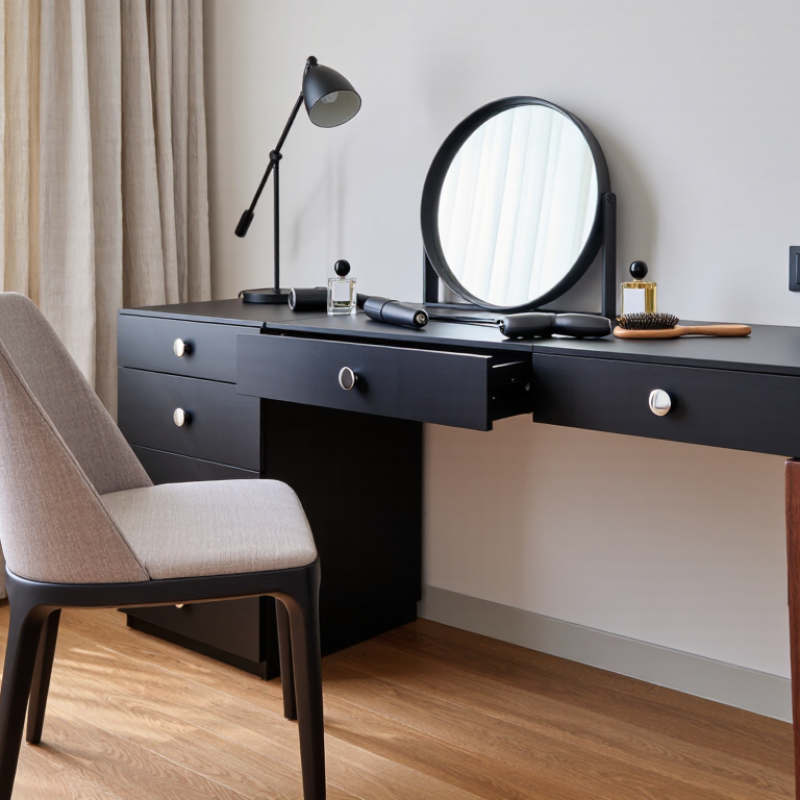
What Defines a Black Dressing Table?
A black dressing table is defined by more than its dark color. It combines a makeup surface, personal storage, and a mirror-ready space. The black finish may be matte, satin, or softly textured. Each option changes the room’s atmosphere. Matte surfaces look calm, but they can reveal dust and fingerprints quickly. Glossy finishes reflect light beautifully, though scratches become more noticeable.
A well-designed dressing table also depends on proportion and daily comfort. The tabletop should hold essential items without forcing the user to reach constantly. Drawers need smooth movement and enough depth for brushes, skincare, and small accessories. Stable legs matter, especially on hard flooring. I usually check whether the table remains steady during ordinary use, not just when it looks attractive in a showroom. That practical test is easy to overlook.
Lighting helps define the piece as much as construction does. A black table can appear elegant beside warm lamps, pale walls, or natural wood. However, poor lighting may make dark drawers difficult to inspect. A mirror placed too high can also create uncomfortable posture. These details are not dramatic, but they affect repeated use. Some black tables feel visually heavy in compact rooms. Choosing a slimmer frame or raised legs can reduce that effect, although the result may offer less storage. There is no perfect design for every home.
How Black Complements Different Interior Styles
Why Choose a Black Dressing Table for Your Home?
A black dressing table can anchor a room without making it feel severe. Its success depends more on surrounding texture than color alone. Against warm white walls, black creates a clean outline and gives pale surfaces more visual weight. Choose a matte finish when the room receives strong daylight. Gloss may reflect windows sharply. That is not always comfortable.
In a modern interior, a simple black table pairs naturally with glass, brushed metal, and straight architectural lines. In an industrial room, it works with exposed brick, timber, and dark hardware. Too much black, however, can flatten the space. A soft rug or woven basket adds useful contrast.
For Scandinavian settings, choose slim legs and leave some wall visible. The result feels lighter. Traditional rooms need a different balance. Curved edges, framed mirrors, and linen curtains can soften the table’s authority. Online, a heavy rectangular design may look impressive. In person, it can crowd a narrow walkway.
Black also complements eclectic interiors because it connects unrelated colors. Terracotta, sage green, dusty blue, and brass can sit beside it without competing for attention. Repeat small black details, such as a lamp base or picture frame, to create visual rhythm.
Avoid matching every accessory. Rooms need breathing space. Check the table under evening lighting before deciding. Black surfaces show dust, fingerprints, and loose powder more clearly than lighter finishes. Drawer layout matters too, especially when daily items must remain accessible. Beauty is useful only when it survives real routines.
How to Select the Right Size, Material, and Storage
Why Choose a Black Dressing Table for Your Home?
A black dressing table can anchor a bedroom with a calm, defined look. Its dark surface also shows dust, fingerprints, and loose powder quickly. That can be useful. You notice cleaning needs sooner.
Measure the available wall before shopping. Leave at least 60 centimetres for comfortable movement in front. Check the table’s height against your chair, especially if you use a mirror daily. A narrow table suits compact rooms, but shallow drawers may limit storage. Larger rooms can support wider designs with separate compartments for cosmetics, hair tools, and jewellery. Do not trust appearance alone. Use a tape measure.
Material affects durability and maintenance. Solid wood feels stable and can be repaired, but it may cost more. Engineered wood offers consistent dimensions and often handles indoor humidity well. Metal frames add strength, while glass surfaces create a lighter appearance. Look for smooth drawer runners, reinforced joints, and a finish that resists ordinary spills. Glossy black surfaces look dramatic, yet they reveal marks easily. Matte finishes hide fingerprints better, though they can show scratches.
Storage should match your routine. Shallow top drawers work well for daily items. Deeper drawers can hold brushes or folded cloths. Interior dividers prevent small objects from gathering in corners. I would avoid choosing extra drawers simply because they look impressive. Unused space becomes clutter. Check whether the mirror, lighting, and power access fit your actual habits before deciding.
How to Maintain a Black Dressing Table
A black dressing table can bring quiet elegance to a bedroom. Its deep finish also reveals dust, fingerprints, and pale scratches quickly. Regular care keeps the surface attractive and protects the material beneath.
Wipe the table with a soft, slightly damp microfiber cloth every few days. Use warm water with a small amount of mild soap for oily marks. Dry the surface immediately, especially around drawer edges and metal fittings. Avoid soaking the cloth. Excess moisture can enter joints and cause swelling on engineered wood. I once used too much furniture polish, and the surface became streaky rather than cleaner.
Keep cosmetics, perfume bottles, and hot styling tools on a washable tray. Spilled alcohol or oily products may dull some finishes if left overnight. Test any cleaner on a hidden area before treating the entire table. Follow the care instructions supplied with the furniture, because lacquer, veneer, and painted wood react differently. Soft pads under mirrors and containers can prevent tiny pressure marks.
Dust gathers in corners.
Check the drawers monthly. Remove debris from the runners, then tighten loose handles gently with the correct screwdriver. Do not force a sticking drawer; humidity may be the real cause. Improve airflow and keep the table away from direct sunlight, which can gradually change black surfaces to a faded charcoal tone. Minor scratches can sometimes be disguised with a matching repair marker, but deep damage needs professional assessment.