East Rand Containers

What Is a Solid Surface Counter Top?

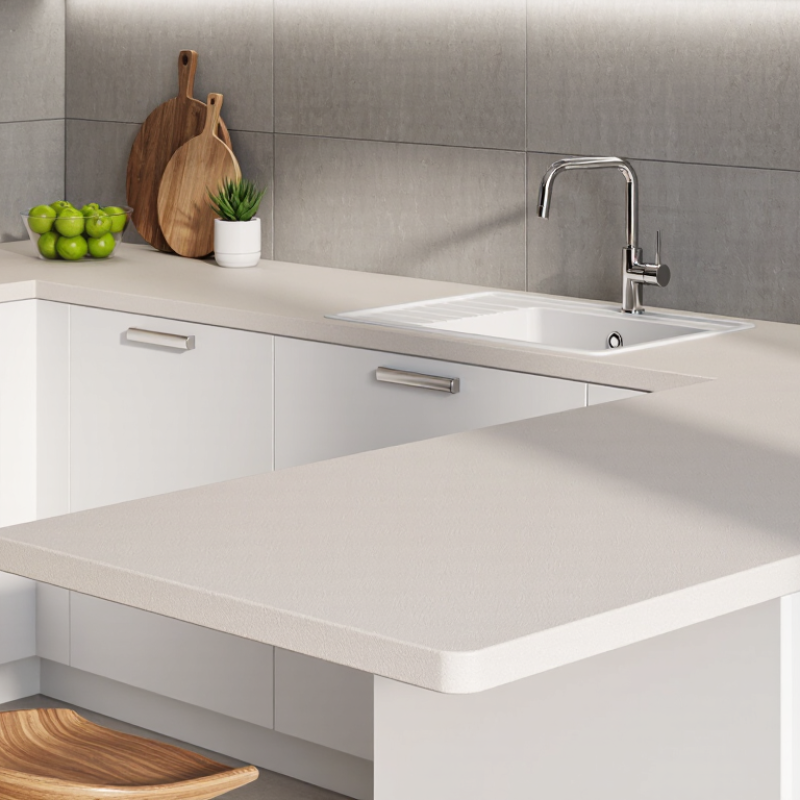
A Solid Surface Counter Top is an engineered work surface made from acrylic, polyester, or blended resins with mineral fillers. Unlike natural stone, it is manufactured with consistent color and texture throughout its thickness. That detail matters when a corner chips or a sink opening needs adjustment. A trained fabricator can often sand, repair, and refinish the damaged area.

Donald Slocum, the DuPont chemist credited with developing Corian, described the material’s central advantage in practical terms: “It was a material that could be worked like wood.” That idea still explains its appeal. Solid surface can be routed, thermoformed, and joined with inconspicuous seams. Long counters may look almost continuous. Integrated sinks can also reduce dirt-trapping edges around busy washing areas.

The material is nonporous, so spills from coffee, cooking oil, or children’s paint are less likely to penetrate its surface. However, it is not indestructible. Hot pans can scorch it, and sharp knives can leave visible marks. A cutting board remains necessary. Dark colors may also reveal scratches more clearly than pale finishes.

That weakness deserves attention. Beauty is not the whole decision. A reliable choice considers daily habits, repair access, installation quality, and long-term expectations. In a kitchen with heavy cooking, a Solid Surface Counter Top offers practical hygiene and flexible design, but it still needs sensible care. Excellent material. Imperfect material. That is the honest starting point.

What Is a Solid Surface Counter Top?

Definition and Core Composition of Solid Surface Countertops

What Is a Solid Surface Counter Top?

Solid surface countertops are non-porous panels made from mineral fillers and polymer resins. The mineral portion commonly includes alumina trihydrate, derived from refined bauxite. Acrylic or polyester resin binds these particles into a dense, workable sheet. Pigments create consistent colors throughout the material.

That composition explains the countertop’s practical behavior. Seams can be bonded and sanded, creating a smoother visual transition between sections. Minor scratches may also be repaired by professional refinishing. The surface feels warm under the hand, unlike many natural stones. Still, it is not indestructible. Hot cookware, sharp blades, and heavy impacts can damage the finish.

The global solid surface market was valued at approximately US$3.5 billion in 2023, according to Grand View Research’s 2024 market analysis. The report also forecasts continued growth through 2030, supported by residential remodeling and commercial construction. Freedonia Group’s 2023 Countertops study similarly identifies renovation activity as a major demand driver in the United States. These figures describe market demand, not guaranteed product quality. That distinction matters.

In professional installation, installers inspect cabinet support, wall conditions, and seam locations before cutting. A poorly supported overhang can fail, even when the material itself meets industry requirements. The category is not perfectly uniform. Resin type, mineral loading, thickness, and fabrication quality can change performance noticeably. A showroom sample may look flawless; a real kitchen still needs thoughtful care.

What Is a Solid Surface Counter Top? - Definition and Core Composition of Solid Surface Countertops
Dimension Typical Description or Data Definition and Practical Significance
Basic Definition A homogeneous, nonporous surfacing material Solid surface countertops are manufactured sheets or molded components made from a resin binder and mineral-based fillers. Their composition is consistent through the material rather than being a thin decorative layer over a different core.
Primary Binder Acrylic, polyester, or an acrylic-polyester blend The resin binds the mineral particles together and gives the countertop its shape, color distribution, workability, and resistance to moisture. Acrylic-based formulations are commonly valued for thermoforming and repairability.
Mineral Filler Alumina trihydrate and other mineral fillers Mineral fillers add body, stiffness, opacity, and surface performance. Alumina trihydrate is widely used because it is a fine white mineral that can be blended into resin systems.
Pigments and Decorative Additives Color pigments, particles, and visual effects Pigments and particulate additives create solid colors, speckled patterns, translucent effects, or stone-like appearances. The pattern generally extends through the sheet, allowing the surface to be refinished.
Surface Porosity Nonporous when properly fabricated and maintained The dense surface does not readily absorb ordinary household liquids. This helps limit the retention of stains and odors and makes routine cleaning relatively simple.
Typical Sheet Thickness Approximately 6 to 13 mm for standard sheets Many solid surface sheets are produced in thicknesses around 6 mm or 12 mm, although available dimensions vary by product specification and application. Thicker visual edges can be fabricated by laminating pieces together.
Seam Appearance Seams can be made visually inconspicuous Fabricators commonly join sections with color-matched adhesive and then sand the joint flush. Seam visibility depends on color, pattern, workmanship, lighting, and the condition of the finished surface.
Edge and Sink Integration Suitable for formed edges and integrated sinks Because the material can be machined and, for suitable acrylic formulations, heated and shaped, it can be used for coved backsplashes, custom edge profiles, and integrated sink designs.
Repairability Many light scratches and minor blemishes can be refinished The surface can often be sanded or polished to reduce the appearance of superficial scratches, scuffs, and small marks. Deep damage may require a qualified fabricator to patch or replace the affected section.
Scratch Resistance Moderate; cutting directly on the surface is not recommended Solid surface is durable for normal countertop use, but it is generally softer than many natural stones and engineered quartz surfaces. Cutting boards should be used to protect the finish.
Heat Performance Sensitive to direct or prolonged high heat Hot cookware, appliances, and heat-generating equipment can discolor, deform, or damage the resin matrix. Trivets or heat pads should be placed under hot objects.
Water and Moisture Performance Good resistance to routine moisture exposure The nonporous surface is suitable for kitchens, bathrooms, reception areas, and other indoor environments where regular contact with water is expected, provided seams and cutouts are correctly fabricated.
Cleaning Requirements Routine cleaning with mild soap and water Most everyday dirt can be removed with a soft cloth or sponge and a mild household cleaner. Abrasive pads and harsh chemicals may alter the finish, especially on polished or darker surfaces.
Common Applications Kitchen counters, bathroom vanities, worktops, wall cladding, and service areas Its seamless fabrication options, moisture resistance, and repairability make solid surface suitable for residential, commercial, healthcare, hospitality, and institutional interiors.
Indoor Use and UV Exposure Primarily intended for interior applications Extended exposure to direct sunlight can affect color stability and may increase thermal stress. Outdoor suitability should be confirmed from the material specification before installation.
Key Distinction from Natural Stone Manufactured resin-and-mineral composite rather than quarried stone Unlike granite or marble, solid surface is produced under controlled manufacturing conditions. It offers consistent composition, customizable fabrication, and repairable surface characteristics, but it requires more protection from high heat.

Key Properties and Performance Characteristics

What Is a Solid Surface Counter Top?

Key Properties and Performance Characteristics

A solid surface counter top is a manufactured slab made from mineral fillers and durable acrylic or polyester resins. Its color runs through the material, not just across the top layer. This construction allows fabricators to create smooth, nearly invisible joints. In a busy kitchen, crumbs and moisture have fewer places to collect. That makes routine cleaning simpler and supports good hygiene practices.

The surface is nonporous, so it does not readily absorb coffee, cooking oil, or water. Many marks can be removed with mild household cleaners and a soft cloth. Light scratches may also be sanded and blended by a trained professional. This repairability is a practical advantage in homes, clinics, and shared workspaces. Still, it is not indestructible. Sharp knives can cut it, and heavy impacts may cause chips or cracks.

Heat performance requires honest attention. Hot pans should rest on trivets because sudden, concentrated heat can damage the finish or weaken a seam. Direct sunlight may also affect certain colors over time, depending on the formulation and installation. A qualified installer should support joints, sinks, and overhangs correctly. Small workmanship details matter. Poorly supported edges can fail even when the material itself performs well. The best evaluation considers cleaning habits, expected impact, heat exposure, and the skill available for future repairs.

Manufacturing Process and Common Design Options

A solid surface countertop combines mineral filler with acrylic or polyester resin. Manufacturers mix these materials under controlled conditions. The blend is then cast into sheets, cured, calibrated, and sanded. CNC equipment cuts sink openings and edge profiles. Heat allows technicians to thermoform selected designs. This creates curved bars, integrated drainboards, and molded sinks without visible seams. Fabricators usually bond joints with color-matched adhesive, then sand the surface continuously.

Design flexibility drives much of its appeal. Homeowners can choose matte, satin, or gloss finishes. Popular options include marble-like veining, terrazzo particles, solid colors, coved backsplashes, and waterfall edges. Pale surfaces brighten small kitchens, while darker tones show scratches more easily. That trade-off deserves honest attention. A flawless showroom sample can look different under strong window light.

The 2024 Houzz U.S. Kitchen Trends Study reports quartz in 39% of renovated countertops, showing strong competition for solid surface. Meanwhile, Grand View Research valued the global countertop market at approximately 131.7 billion dollars in 2023. These figures cover broader categories, not solid surface alone. They still indicate a crowded design market. In practice, experienced fabricators inspect color batches, allow for thermal movement, and confirm cabinet leveling before installation. Small errors matter. Seam placement, sink support, and edge thickness can affect the finished result more than a color swatch suggests.

Installation Methods and Seam Treatment

What Is a Solid Surface Counter Top?
Installation Methods and Seam Treatment

A solid surface countertop is a nonporous, repairable sheet made from mineral filler and acrylic or polyester resin. Grand View Research valued the global solid surface market at approximately $3.8 billion in 2023. Its report also forecasts steady growth through 2030, partly because seamless appearance remains attractive in residential kitchens.

Installation begins with accurate templating. Cabinets must be level, supported, and dry before cutting starts. Fabricators commonly use adhesive to join sections and mechanical fasteners to secure the top below. Large islands may need extra support rails. Wall clearance matters too. A tight fit can buckle when the material expands slightly. I measure twice, but real rooms still surprise me.

Seam treatment decides whether the installation looks professional. Technicians align the edges, clean the joint, and apply color-matched adhesive. They then clamp the pieces firmly and allow curing time before sanding. A good seam should feel smooth under a fingertip and remain difficult to see under side lighting. ASTM C920, often referenced for flexible sealants, supports careful movement management around adjoining surfaces, although it does not replace the countertop manufacturer’s instructions. Dark colors expose sanding marks quickly. Poor lighting hides mistakes. That is risky. My own weak point is rushing final inspection; a joint may look perfect from standing height yet reveal a hairline gap near the sink.

What Is a Solid Surface Countertop?

Solid surface countertops are nonporous sheets fabricated into worktops, backsplashes, and integrated sink areas. The chart shows representative material thicknesses commonly used in countertop installation.

Installation and seam treatment: Countertop sections are supported on a level cabinet base and joined with a color-matched two-part acrylic adhesive. After curing, the seam is trimmed flush, progressively sanded, and polished to reduce its visibility. Actual thickness and adhesive requirements should be confirmed with the material fabricator.

Care, Repairs, Advantages, and Limitations

What Is a Solid Surface Counter Top?

A solid surface counter top is a nonporous, man-made material used for kitchens, bathrooms, and work areas. Its color runs through the slab, so light scratches usually look less obvious. Seams can also be joined smoothly, creating a continuous appearance around sinks and backsplashes. The surface feels warm and slightly softer than stone.

Daily care is simple. Wipe spills with mild soap and a damp microfiber cloth. Dry the area afterward, especially near sink edges. Avoid cutting directly on the counter, because knives can leave visible marks. Hot pans may discolor or distort the material. Use a trivet every time.

Small scratches are often repairable. Fine abrasive pads can reduce shallow marks when used with steady, even pressure. Deeper damage may require a trained fabricator, particularly near seams or integrated sinks. An uneven repair can create a dull patch. That detail is easy to underestimate.

The main advantage is practical flexibility. The material is hygienic, easy to clean, and available in many colors. It can support curved edges and custom sink designs. However, it is not indestructible. Strong impact can chip an edge, and prolonged heat can cause permanent damage. Dark finishes may reveal fingerprints and fine scratches more clearly. Careful use matters.