China Top Heavy Duty Storage Cabinet Supplier?
Choosing a China Top Heavy Duty Storage Cabinet Supplier requires more than comparing prices and product photos. Buyers need evidence of manufacturing experience, material quality, and dependable service. A professional supplier should explain steel grades, load capacity, surface treatment, welding methods, and inspection procedures clearly.
A well-designed Heavy Duty Storage Cabinet should support demanding workplaces, including warehouses, workshops, factories, laboratories, and maintenance rooms. Look for reinforced shelves, adjustable leveling feet, secure doors, smooth hinges, and durable powder-coated surfaces. A cabinet holding several hundred kilograms should remain stable without excessive bending. Its dimensions should also fit real aisles, corners, and working spaces.
Factory experience matters. Request production photos, sample reports, packaging details, and references from comparable projects. Ask how the supplier checks panel thickness, coating adhesion, door alignment, and load performance before shipment. Clear communication about customization, lead times, replacement parts, and after-sales support can prevent expensive misunderstandings.
Still, no supplier is perfect. A polished website cannot replace factory verification or independent quality checks. Some product descriptions may sound stronger than the actual performance. Buyers should compare specifications carefully and test samples when possible. Shipping damage, installation conditions, and changing project requirements also deserve attention. The best supplier is not always the cheapest one. It is the partner that offers consistent quality, practical engineering, transparent communication, and reliable delivery from China to the final workplace. A careful review may take longer, but it can protect safety, budget, and daily productivity.
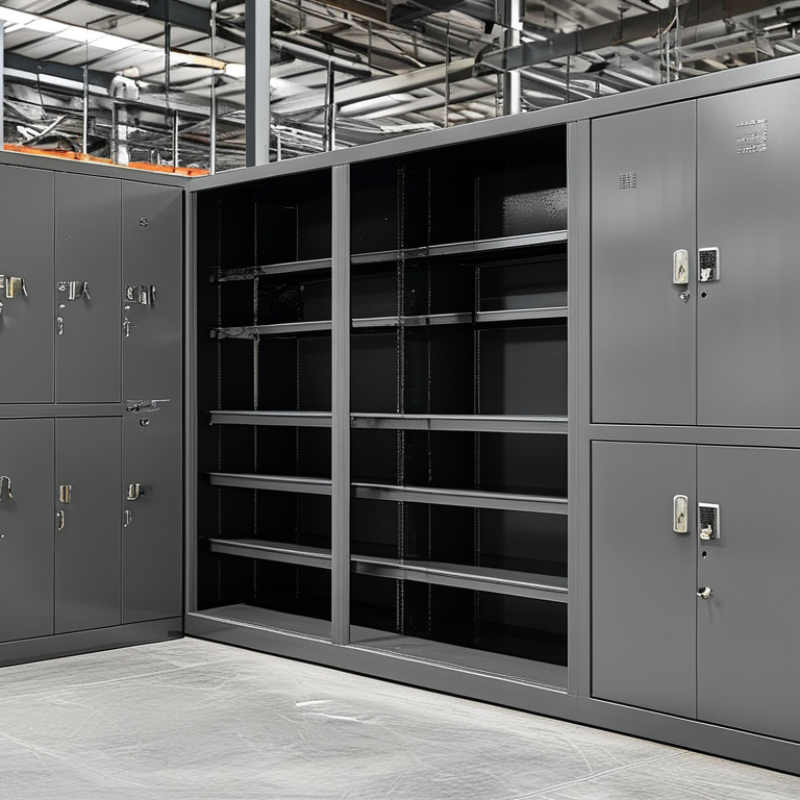
What Is a Heavy-Duty Storage Cabinet?
A heavy-duty storage cabinet is an industrial-grade enclosure designed to hold substantial weight safely. It is stronger than a standard office cabinet.
Its frame usually uses thick steel panels, reinforced corners, and durable hinges. Adjustable shelves help organize tools, components, documents, or workshop supplies. Many shelves support several hundred kilograms when the load is evenly distributed. Capacity matters.
A secure locking system protects stored items from unauthorized access. Powder-coated surfaces also resist scratches, moisture, and daily wear. However, “heavy-duty” does not mean unlimited strength. Shelf capacity, cabinet size, and installation conditions must be checked separately.
From practical warehouse assessments, I examine weld quality, door alignment, shelf stability, and base strength. If a cabinet rocks on an uneven floor, its rated capacity becomes less meaningful. Anchoring may be necessary in busy work areas. A cabinet near heat or moisture needs suitable protection.
One detail is easy to overlook. Empty space affects usability. Deep shelves may hold more, but they can hide smaller items. I would not choose the largest cabinet automatically.
A reliable supplier should provide clear load ratings, material information, inspection records, and installation guidance. The label is not proof. Performance depends on design, testing, and careful use.
Key Types of Heavy-Duty Storage Cabinets in China
China’s heavy-duty storage cabinet market serves factories, warehouses, workshops, and maintenance rooms. Cabinet selection should follow load, access frequency, and floor conditions.
Adjustable steel cabinets suit boxed components and irregular inventory. Their movable shelves support changing stock profiles. Drawer cabinets organize bolts, bearings, and electrical parts. Full-extension drawers improve visibility, but overloaded drawers can distort frames. Mobile cabinets add flexibility for maintenance teams. They need locking casters and stable anti-tip systems. Enclosed pallet cabinets handle heavier cartons and reduce dust exposure. For humid workshops, powder coating alone may not provide enough protection.
The China Federation of Logistics and Purchasing reported China’s social logistics costs at about 18.2 trillion yuan in 2023. It also reported a logistics-cost-to-GDP ratio of 14.4%. These figures show why space efficiency and faster picking matter. The 2024 MHI Annual Industry Report identified robotics and automation as major supply-chain investment priorities. Heavy-duty cabinets should therefore support barcode labels, modular bins, and future equipment integration.
Load ratings require careful reading. A stated capacity may apply only to evenly distributed weight. I have seen cabinets look strong but fail after uneven loading. That detail is easy to miss. Buyers should request material thickness, shelf deflection tests, weld details, and dynamic drawer-cycle data. Chinese suppliers with ISO 9001-based quality systems can improve traceability, although certification alone does not prove cabinet performance. Reliable evaluation still requires sample inspection, installation checks, and realistic load testing.
Materials, Features, and Load-Bearing Standards
China Top Heavy Duty Storage Cabinet Supplier?
Materials, Features, and Load-Bearing Standards
A dependable heavy duty storage cabinet begins with the steel grade and panel thickness. Cold-rolled steel offers stable surfaces and cleaner forming. Common panel thicknesses range from 0.8 to 1.5 millimeters. However, thicker steel does not always mean better performance. Weld quality, shelf design, and frame structure also control strength.
In warehouse checks, I inspect the corners, shelf supports, and cabinet base first. Adjustable shelves should lock firmly into every position. Powder coating helps resist scratches, humidity, and light chemical exposure. A reinforced door reduces twisting during daily use. Anti-tip hardware matters when several shelves carry dense tools or components. Small details matter.
Load capacity must be stated per shelf, not only for the whole cabinet. A reliable supplier should identify the test method and safety margin. The rating should explain whether the load is uniformly distributed or concentrated. Ask for test records, production inspection details, and material certificates. Do not guess. Measure the deflection. A shelf that bends visibly may still hold weight, but repeated bending can weaken the structure. Local standards and project requirements should be checked before ordering. Sometimes supplier data looks precise but lacks test conditions. That gap deserves a written question.
China Top Heavy Duty Storage Cabinet Supplier? – Materials, Features, and Load-Bearing Standards
The chart shows representative rated shelf-load ranges commonly specified for industrial steel storage cabinets. Typical materials include cold-rolled steel, galvanized steel, and stainless steel, while powder coating improves corrosion resistance and surface durability. Actual load capacity depends on steel thickness, shelf geometry, reinforcement, cabinet anchoring, and testing. EN 15635 and relevant product-specific safety and durability tests should be reviewed before selecting a cabinet.
How to Evaluate a Top Chinese Storage Cabinet Supplier
China Top Heavy Duty Storage Cabinet Supplier?
How to Evaluate a Top Chinese Storage Cabinet Supplier
Evaluating a Chinese storage cabinet supplier requires more than comparing catalog prices. Inspect the factory’s production flow, from steel cutting to final packaging. Ask for steel thickness, load ratings, weld standards, and coating specifications. A reliable supplier should explain each figure clearly. Vague answers deserve caution.
Request a sample cabinet before placing a large order. Check door alignment, hinge movement, drawer smoothness, and sharp edges. Place measured weights inside the cabinet and observe any bending. Examine the powder coating under bright light. Uneven surfaces, pinholes, or weak corners may reveal rushed production. Small details matter.
Factory photos can help, but they are not proof. Arrange a live video inspection or use an independent inspection service. Review quality records, material certificates, testing reports, and export experience. Confirm packaging with a drop-test discussion, especially for long-distance shipping. A strong supplier also provides clear drawings, production updates, and written warranty terms.
Communication is another practical test. Send the same technical questions to several suppliers and compare their answers. Fast replies are useful, but accurate replies matter more. One uncomfortable truth remains: low pricing can hide thinner steel, weaker locks, or higher replacement costs. Even careful buyers can miss defects. Allow time for correction before shipment.
Ordering, Quality Control, and After-Sales Support
China Top Heavy Duty Storage Cabinet Supplier?
Choosing a China heavy-duty storage cabinet supplier requires more than a low quotation. Ordering should begin with approved drawings, load targets, dimensions, coating requirements, and delivery terms. Specify steel thickness, shelf capacity, weld points, lock type, and packaging details. McKinsey’s 2022 Global Supply Chain Leader Survey found that 73% of companies had adopted dual sourcing. This supports checking backup material sources and production capacity before placing a large order. Request a sample cabinet first. Measure it carefully.
Quality control should be visible, not promised. Ask for incoming steel records, welding inspection photos, coating thickness results, and final load testing. The 2024 MHI Annual Industry Report reported 55% cloud-computing adoption among surveyed supply-chain professionals. Digital inspection files can improve traceability, but only when records match each cabinet’s batch number. I would not trust a polished inspection video alone. Human review still matters. After-sales support should include a named contact, response-time targets, spare hinges, lock components, installation guidance, and a clear replacement process. A cabinet arriving perfect but lacking replacement parts is not a complete quality result.
Tips: Confirm tolerances in writing. Keep one signed sample. Test loaded shelves on arrival. Photograph damaged packaging before opening. Ask how quickly technical questions receive answers. Review warranty exclusions carefully; unclear wording creates avoidable disputes. Supplier performance should be reviewed after delivery, not only during negotiation.