
Choosing the right Handheld Tyre Inflator can make roadside maintenance faster, safer, and less stressful. A suitable model should do more than produce air. It should provide dependable pressure readings, practical battery life, and enough power for your vehicle’s tyres.
Real-world use often reveals details that product photos hide. A bright display helps in rain or poor light. A flexible hose reduces awkward bending near the valve. Some compact inflators become hot after several minutes, so cooling time matters. Check the manufacturer’s duty-cycle guidance before inflating multiple tyres.
Small details matter.
Professional recommendations usually begin with the correct pressure range. Compare the inflator’s maximum pressure with your car, motorcycle, bicycle, or trailer requirements. Do not rely only on the highest advertised number. An accurate gauge, secure valve connection, and automatic shut-off can prevent overinflation. Battery capacity also deserves attention, especially during long journeys.
I once focused too heavily on speed and overlooked hose length. That choice was convenient in the shop but frustrating beside a parked vehicle. This is why honest evaluation should include noise, weight, storage, charging options, and operating temperature. No device is perfect. A more expensive model may still disappoint if its controls are confusing or its battery cannot hold charge.
These seven practical tips will help you compare models with greater confidence. They focus on measurable performance, everyday handling, and safe operating habits. Always follow the vehicle manufacturer’s recommended tyre pressure and the inflator’s instructions. A few careful checks can prevent an expensive mistake.
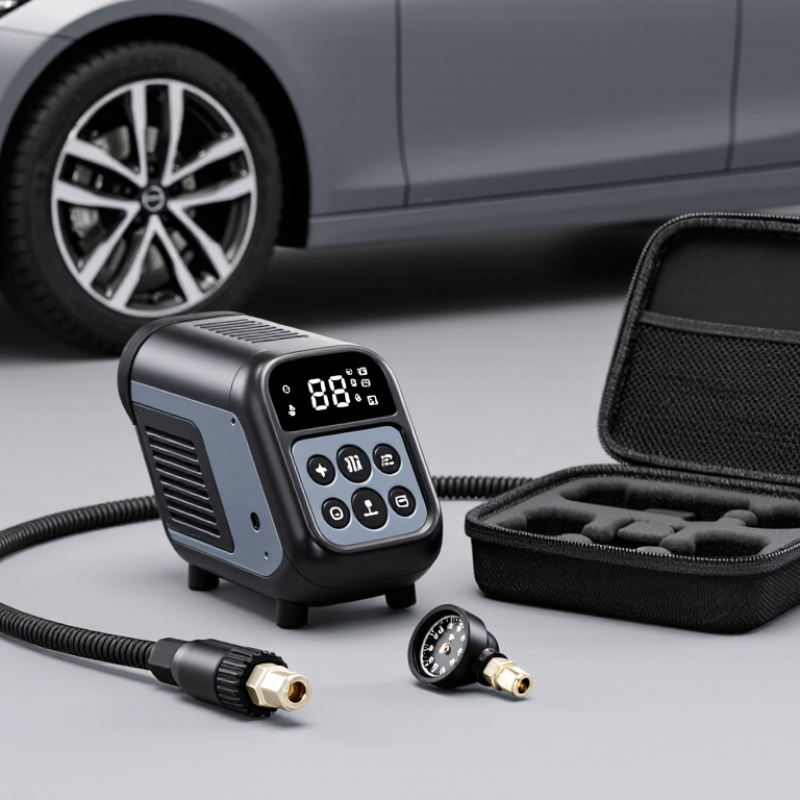
A suitable handheld tyre inflator should match your vehicle’s pressure requirements, valve type, and power source. Fit matters more than flashy speed. Check the vehicle handbook or the pressure label near the driver’s door. Most passenger cars need a different pressure from SUVs, vans, or trailers. The inflator’s maximum rating should sit comfortably above the recommended pressure. Do not rely on the maximum figure alone. Airflow, gauge accuracy, and heat control affect real performance. A small reading error matters.
For daily driving, choose a model with a clear pressure display, a secure valve connector, and an automatic shut-off function. A long cable can reach all four wheels without stretching across the road. Battery-powered units are convenient, while 12-volt models avoid charging delays. Your vehicle’s socket must support the inflator’s electrical demand. Some sockets switch off when the engine is not running. Check this before an emergency.
In practical use, I prefer an inflator with a flexible hose and a stable base. It should remain steady on rough ground. For larger tyres, airflow and duty cycle become more important than compact size. Inflating several low tyres can make the motor hot, so cooling breaks are sensible. I once underestimated this and trusted the advertised speed too much. The unit slowed noticeably. A separate, reliable pressure gauge is still useful. Measure tyres when cold, then recheck after driving, because heat changes the reading.
A good handheld tyre inflator should be judged by measured performance, not attractive packaging claims. Inflation speed matters when you face a soft tyre beside a dark roadside. Compare the time needed to raise pressure from 30 to 36 psi. Test the same tyre, because tyre size changes the result. A model filling a bicycle tyre quickly may struggle with a larger vehicle tyre. The number on the box is only a starting point.
Pressure range deserves closer attention. A wide range is useful, but accuracy at ordinary driving pressure matters more. Check whether the digital gauge matches a separate, trusted gauge. Look for stable readings and an automatic shutoff that does not overshoot. Some inflators reach high pressure but become painfully slow near their limit. Heat changes performance. After several minutes, the casing and hose may feel hot, so allow cooling time before another test.
Airflow helps explain inflation speed, but it does not tell the whole story. Higher airflow can shorten the initial filling stage, while maximum pressure controls the final stage. Compare both figures instead of choosing the largest number. I once focused on airflow and ignored battery capacity; the inflator performed well, then stopped before the second tyre was ready. A longer hose, bright display, and secure valve connection also matter during practical use. Some advertised tests seem optimistic, so repeat them under normal conditions.
A handheld tyre inflator becomes more useful when its power source matches your driving habits. A 12-volt car socket offers dependable emergency power, even after long storage. However, the cable can feel restrictive beside a rear tyre. A rechargeable battery gives more freedom in driveways, garages, and roadside situations. Choose one with enough capacity for all four tyres, not just a quick top-up.
Battery capacity deserves careful attention. A larger mAh number does not always mean stronger performance. Compare watt-hours when possible, because voltage also affects usable energy. A battery indicator prevents unpleasant surprises. Charging through USB-C is convenient, but confirm whether the charger supplies enough power. Some compact units charge slowly with weak adapters. That can matter during travel.
Look for thermal protection, overcharge protection, and a battery that remains stable in cool weather. Cold mornings can reduce runtime noticeably. An automatic shut-off helps prevent overinflation, but its accuracy still needs checking with a separate gauge. I once selected a small inflator because it fitted neatly in the glove box. I overlooked its short hose. It reached the front tyre, barely. A flexible hose, bright display, and built-in light can save time when visibility is poor. Test the inflator at home before relying on it. Performance claims can look impressive, yet real pressure rise depends on tyre size, temperature, and battery charge.
A good handheld tyre inflator should make pressure checks safer, clearer, and less tiring. The U.S. Department of Energy reports that correct tyre pressure can improve fuel economy by up to 3%. Choose a model with a calibrated digital gauge, readable numbers, and pressure units you understand. Backlighting helps beside a dark roadside. Large buttons are useful with cold or wet fingers. They sound minor. They are not.
Look for automatic shut-off, preset pressure, and a reliable pressure-release valve. These controls reduce overinflation, especially when children or passengers create distractions. A flexible hose and secure chuck help prevent sudden air loss. NHTSA recommends checking pressure when tyres are cold, because driving increases internal pressure and can mislead the reading. Avoid choosing only by maximum pressure or battery size. Check inflation speed, operating noise, and heat protection. A thermal cut-off matters during repeated use. I still verify the final reading with a separate gauge. That extra step feels slightly excessive, but portable gauges can drift. A 2023 tyre-safety review from the National Highway Traffic Safety Administration also reinforces the importance of regular pressure monitoring, not occasional emergency inflation. Choose a display you can read quickly, automatic control you can trust, and safety features you will actually use.
| Tip | Feature Dimension | What to Look For | Why It Matters | Practical Check Before Buying |
|---|---|---|---|---|
| 1 | Pressure Range and Accuracy | Choose a model whose rated range covers the target pressure of your tyres. A useful general range for passenger vehicles is up to approximately 100–150 PSI, with pressure accuracy clearly stated by the manufacturer. | The inflator must reach the required pressure without operating continuously at its maximum limit. Better accuracy helps prevent underinflation, overinflation, uneven wear, and reduced fuel efficiency. | Check the vehicle, motorcycle, bicycle, or equipment manufacturer’s recommended pressure first. Do not treat the inflator’s maximum PSI rating as the correct operating pressure. |
| 2 | Automatic Pressure Control | Prioritize a preset-pressure function with automatic shut-off when the selected pressure is reached. The target should be adjustable in small increments, preferably in 1 PSI or 0.1 bar steps. | Automatic control reduces the risk of overinflation and allows more consistent results than manually stopping the pump while monitoring the gauge. | Set the desired value, start the inflator, and confirm that it stops automatically. The control should remain easy to operate while wearing gloves or in low light. |
| 3 | Display and Measurement Units | Look for a readable digital display showing at least PSI and bar. kPa is also useful for users who follow metric specifications. Backlighting and large characters improve visibility. | Clear units help prevent setting errors. A bright, high-contrast screen is especially important at night or when the tyre valve is in a shadowed position. | Confirm that the unit can be changed without complicated menus. Compare the displayed reading with a separate, calibrated pressure gauge when accuracy is important. |
| 4 | Safety Protection | Select an inflator with overheat protection, overload protection, short-circuit protection, and automatic shut-off. A visible battery or thermal warning indicator is an added benefit. | Portable compressors draw high electrical current and can become hot during operation. Protection features reduce the risk of damage, burns, battery failure, or unsafe operation. | Read the operating instructions for maximum continuous run time and required cooling intervals. Stop using the unit if the housing, cable, or battery becomes unusually hot or damaged. |
| 5 | Power Source and Runtime | Compare battery capacity, charging time, and supported power options. A rechargeable lithium-ion battery is convenient; a 12-volt vehicle connection can provide a useful backup. | Runtime determines whether the inflator can handle several tyres or a low-pressure emergency without frequent recharging. Actual performance varies with tyre size, starting pressure, temperature, and battery condition. | Check whether the quoted runtime is measured under a defined load. Confirm the charging connector, cable length, battery status indicator, and whether the battery is replaceable or integrated. |
| 6 | Hose, Valve Compatibility, and Airflow | Look for a secure threaded or locking tyre chuck, a flexible hose, and adapters for common valves such as Schrader and Presta. Airflow should be stated separately from maximum pressure. | A reliable connection prevents air leakage and makes inflation easier. Higher airflow generally reduces inflation time, while maximum pressure alone does not indicate how quickly a tyre will inflate. | Verify that the chuck fits the intended valve and that adapters can be stored onboard. For larger tyres, compare inflation-time claims using a similar starting pressure and tyre size. |
| 7 | Ergonomics, Lighting, and Maintenance | Choose a stable handle, non-slip grip, hose storage, LED work light, and an easy-to-clean air filter or intake area. A compact case is useful for vehicle storage. | Good ergonomics reduce handling errors, while an LED light improves valve visibility during roadside use. Clean airflow helps protect the pump and maintain performance. | Check the unit’s weight, noise information, control layout, and storage method. Keep the intake vents clear, avoid moisture, and allow the device to cool according to the manual. |
Safety note: Always follow the vehicle or equipment manufacturer’s recommended tyre pressure, inspect the tyre and valve before inflation, and never exceed the tyre’s marked maximum pressure.
A good handheld tyre inflator should fit the real spaces where you use it, not just look compact online. I test portability by carrying it in a glovebox, then connecting it beside a parked car. A balanced handle, readable pressure display, and flexible hose matter when the valve sits behind a spoke. Battery models feel convenient, but a low charge can leave you waiting at the roadside. Keep a 12-volt cable or manual gauge nearby. That may seem excessive.
Durability shows through practical details: protected buttons, a firm chuck, heat-resistant housing, and strain relief around the cable. During repeated inflation, the motor should maintain steady airflow without becoming painfully hot. Check the stated duty cycle, because some units need cooling after only a few minutes. I also compare its pressure reading with a trusted workshop gauge. Small errors matter. A display can be bright yet inaccurate, and I once trusted one too quickly.
Accessories should solve actual problems, rather than fill a box. Useful additions include valve adapters, a storage pouch, spare seals, and a long enough power lead. A built-in light helps with night checks, but it cannot replace safe roadside visibility. For value, calculate the purchase price, battery replacement cost, warranty length, and likely repair options. The cheapest inflator may cost more if its hose cracks or its battery becomes unavailable. Read independent test data and user reports, while treating extreme claims cautiously. Record inflation time after several uses, because performance often changes as the motor heats.