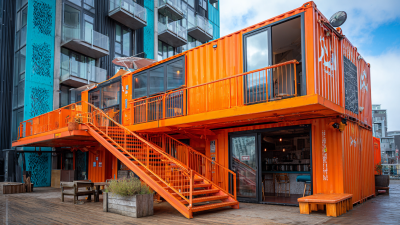
How to Choose the Right Container Offices for Your Business Needs
In today's dynamic business environment, the need for flexible and efficient workspace solutions has never been greater. Container offices have emerged as a popular choice for companies looking to expand their operational capabilities without the constraints of traditional office spaces. These versatile structures not only offer a cost-effective alternative but also provide a unique aesthetic and functionality that can be tailored to suit various business needs.
When choosing the right container offices for your business, it is essential to consider factors such as layout, size, and purpose. The adaptability of container offices allows businesses to create customized solutions that enhance productivity and employee satisfaction. Additionally, factors like insulation, ventilation, and connectivity play a crucial role in ensuring a comfortable work environment. By carefully evaluating these elements, businesses can optimize their choice of container offices to align with their strategic goals and operational demands.

Understanding Container Offices: Key Benefits for Businesses
Container offices have emerged as a popular solution for businesses looking for flexibility and cost-effectiveness. One of the key benefits of utilizing container offices is their modular nature, allowing companies to scale their workspace according to evolving needs. This adaptability makes them ideal for startups and growing businesses that may require temporary or expandable office spaces without the long-term commitment of traditional leases.
Additionally, container offices can be designed to promote sustainability. Many businesses are prioritizing eco-friendly practices, and using repurposed shipping containers reduces waste and minimizes the environmental impact associated with constructing new buildings. These offices can be equipped with energy-efficient features, such as solar panels and proper insulation, further enhancing their appeal for companies looking to balance profitability with social responsibility.
The unique aesthetic of container offices can also create an inviting and innovative work environment, helping to foster creativity and collaboration among employees.
Assessing Your Business Needs: Size, Functionality, and Budget
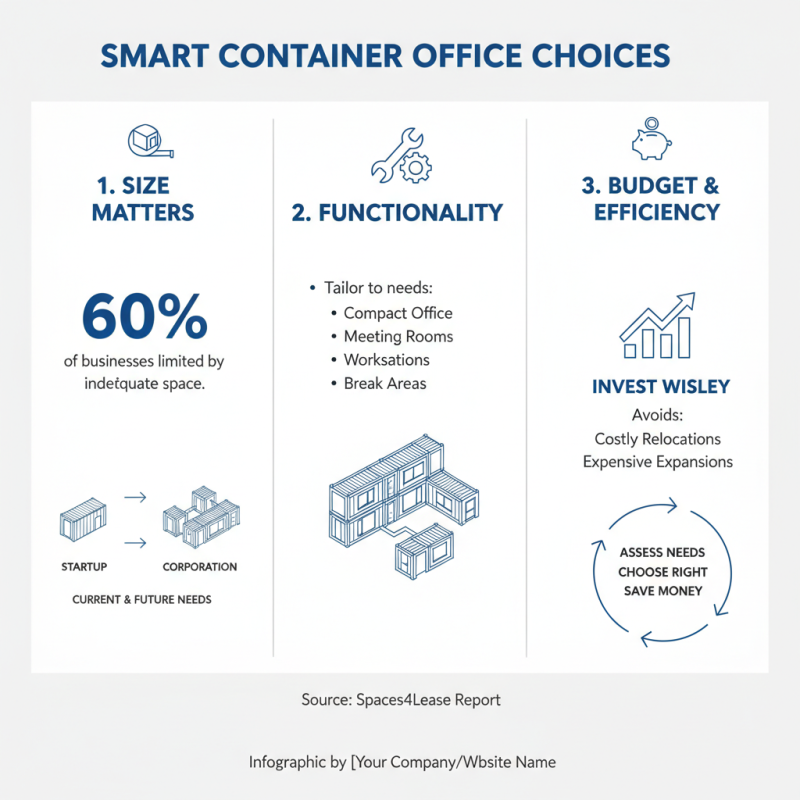
When choosing container offices for your business needs, a thorough assessment of size, functionality, and budget is crucial. According to a report by Spaces4Lease, approximately 60% of businesses report that inadequate space restricts their operational efficiency. This statistic emphasizes the importance of choosing a container office that meets your spatial requirements. For instance, a small startup may only need a compact office space, while larger corporations might require multiple units to accommodate their teams. Therefore, businesses should evaluate their current and future space needs carefully to avoid costly relocations or expansions.
Functionality is another critical factor to consider. A study conducted by Container Solutions revealed that businesses utilizing container offices benefit from superior adaptability, with 72% of respondents stating that mobile office solutions have improved their operational flexibility. This adaptability allows companies to easily modify the layout or purpose of their space as their needs evolve, whether it’s for additional workstations, meeting rooms, or storage. Assessing the specific functions your container office must serve can greatly influence the overall design and configuration, ensuring that the chosen space works effectively for the intended use.
Lastly, budgetary constraints play a significant role in the decision-making process. According to the Modular Building Institute, the average cost of container offices typically ranges from $1,000 to $2,500 per month, depending on size and amenities. Businesses should not only consider the upfront costs but also account for long-term operating expenses like maintenance and utilities. Establishing a clear budget helps in narrowing down choices and ensures that the selected container office aligns with both current financial capabilities and long-term business goals. By strategically assessing size, functionality, and budget, businesses can successfully select container offices that are tailored to their distinct needs.
Types of Container Offices: Customization and Site Requirements
When selecting container offices for your business, understanding the various types available and their customization options is crucial. Container offices come in several configurations, each suited for different operational needs. According to a recent report by IBISWorld, the market for portable and modular offices has experienced an annual growth rate of about 4.2% over the last five years, highlighting the rising demand for flexible workspaces. Options range from standard modified shipping containers to fully customized builds that can incorporate features such as HVAC systems, insulation, and energy-efficient materials.
Customization is key when determining the right container office. Businesses can tailor their spaces to reflect specific functional requirements, such as adding partitions for private offices or improving accessibility for employees with disabilities. A study by the Modular Building Institute indicates that well-designed modular buildings can save up to 20% on construction costs compared to traditional sites, while also reducing their environmental footprint by minimizing waste. Furthermore, site requirements play a critical role in the selection process; it’s essential to assess zoning regulations, adequate space availability, and infrastructure capabilities before finalizing a choice. This consideration ensures that the container office will seamlessly integrate into the business environment while complying with local building codes.
How to Choose the Right Container Offices for Your Business Needs - Types of Container Offices: Customization and Site Requirements
| Type of Container Office |
Key Features |
Customization Options |
Site Requirements |
Cost Range |
| Standard Container Office |
Basic workspace, portable |
Paint color, window placement |
Flat ground, access to utilities |
$2,000 - $5,000 |
| Modified Container Office |
Insulated, more spacious |
Interior layout, electrical systems |
Stable foundation, power supply |
$5,000 - $10,000 |
| Luxury Container Office |
High-end finishes, fully furnished |
Custom furnishings, exterior design |
Requires planning approval, utilities |
$10,000 - $30,000 |
| Mobile Container Office |
Easily transportable, compact |
Storage solutions, security features |
Parking space, vehicle access |
$3,000 - $7,000 |
Regulatory Compliance: Zoning Laws and Safety Standards
When selecting container offices for your business, one of the most critical aspects to consider is regulatory compliance. Zoning laws vary widely by location and can dictate what types of structures are permitted within certain areas. It is essential to research local regulations to ensure that your container office adheres to zoning specifications, including land use designations and property line requirements. Consulting with local authorities can prevent costly fines and project delays, ensuring a smoother establishment of your workspace.
Safety standards are equally important when choosing a container office. These standards ensure that the structure is safe for occupancy and includes proper fire exits, lighting, and ventilation systems. Familiarizing yourself with the building codes in your area will help you select a container office that not only meets legal requirements but also creates a safe environment for employees and visitors.
Tips for ensuring compliance include contacting your local zoning office early in the planning process, using professional services for site inspections, and staying updated on any changes in local regulations. Additionally, consider involving a licensed architect or contractor familiar with container modifications to navigate safety standards effectively. This proactive approach will aid in achieving a compliant and functional container office setup.
Container Offices: Regulatory Compliance Awareness
Cost Analysis: Comparing Container Offices with Traditional Spaces
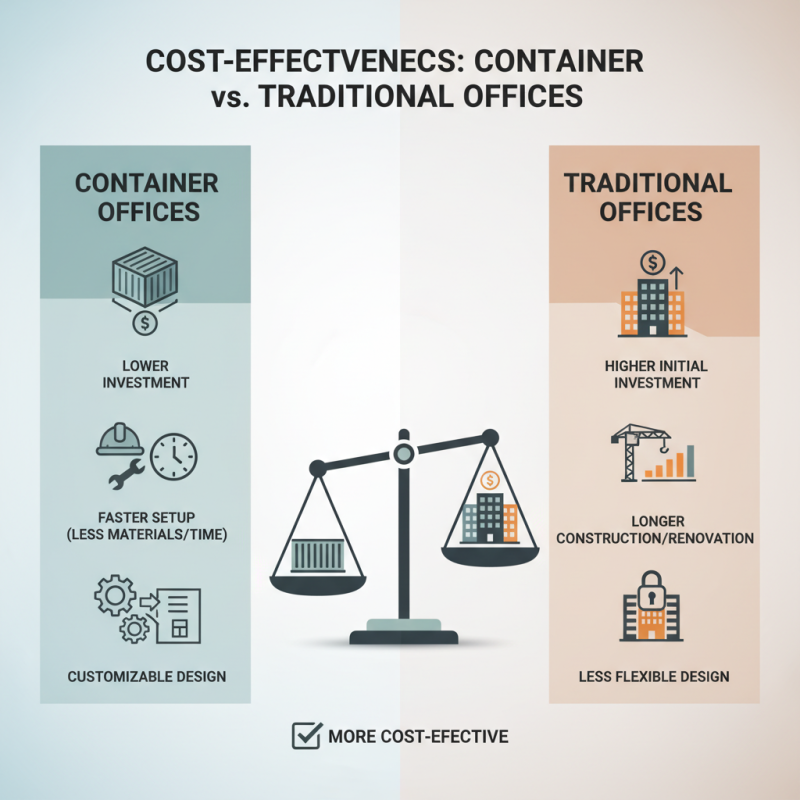
When evaluating the cost-effectiveness of container offices versus traditional office spaces, several key factors come into play. First, the initial investment for container offices is often lower. These modular structures typically require fewer resources to set up, reducing both material costs and construction time. Furthermore, container offices are highly customizable, allowing businesses to tailor the design to meet their specific needs without engaging in extensive renovations.
In addition to lower upfront costs, container offices can deliver significant savings in operational expenses. For instance, they tend to be more energy-efficient due to their size, leading to reduced utility bills. The flexibility of container offices also means businesses can easily relocate or expand as needed without facing the financial burdens associated with lease termination or new construction. In contrast, traditional office spaces often come with longer lease commitments and higher ongoing maintenance costs, making container offices a compelling alternative for startups and growing companies looking to optimize their expenditure while still accessing functional working environments.