
Choosing the right Porcelain Floor tiles can shape a project’s appearance, safety, and long-term maintenance costs. Global buyers often compare more than color and price. They examine water absorption, breaking strength, surface texture, slip resistance, and production consistency.
This guide introduces ten strong porcelain tile options for residential, hospitality, retail, and commercial spaces. Each selection should be judged against its intended environment. A polished tile may brighten a hotel lobby, yet it can require greater care in wet areas. A textured finish may improve grip, but dust can collect in its deeper pattern.
Details matter.
In sourcing projects, I have seen attractive samples fail during broader quality checks. Shade variation, uneven calibration, weak packaging, and unclear technical data can create expensive delays. Reliable manufacturers provide test reports, batch information, installation guidance, and responsive support. Buyers should confirm regional standards with qualified local professionals, because climate, building codes, and installation practices differ across markets.
The following recommendations focus on practical performance, visual flexibility, and dependable supply. They consider large-format panels, stone-look surfaces, wood-inspired designs, and durable outdoor choices. No tile is perfect. A beautiful option may still be unsuitable for heavy traffic or freeze-thaw conditions. Careful review remains essential. Compare samples in natural light, inspect edges closely, and request current specifications before placing a substantial order.
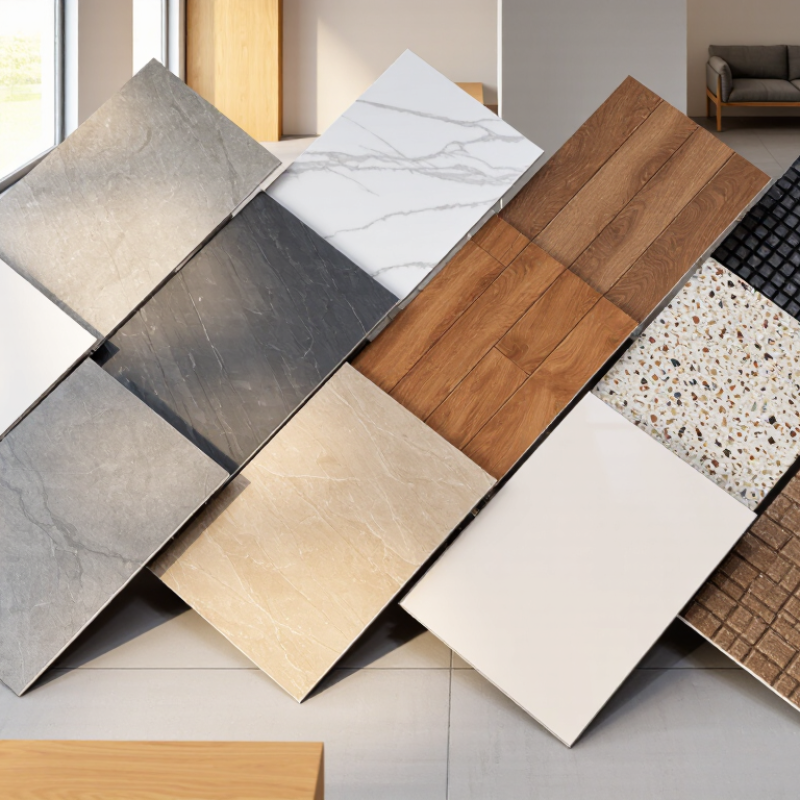
10 Best Porcelain Floor Tiles for Global Buyers?
A suitable porcelain floor tile must survive different climates, shipping routes, and installation habits. ISO 13006 and ASTM C373 classify porcelain tiles at 0.5% or lower water absorption. That figure matters in humid homes, cold warehouses, and outdoor areas. Ask for independent test reports, not only supplier claims. Look for consistent thickness, calibrated edges, and clear batch identification. A tile that looks perfect under showroom lights may reveal shade variation after installation.
Surface safety also deserves attention. The 2024 TCNA Handbook recommends evaluating slip resistance for the actual use area, rather than relying on a single glossy sample. A bathroom, hotel entrance, and covered terrace need different surface decisions. PEI wear ratings help with traffic planning, while chemical-resistance tests support commercial cleaning requirements. Small details count. A rough back can improve mortar coverage, but excessive roughness may increase installation time.
Global buyers should also examine packaging, pallet strength, spare quantities, and technical documents in readable English. The United Nations Comtrade database shows ceramic tile trade across many regions, but trade volume alone does not prove product suitability. In my experience, a two-millimeter size difference can disrupt a large grid and create expensive labor problems. I still question some “premium” claims because test conditions may not match real sites. Reliable purchasing requires samples, factory records, and a written inspection plan. Performance is never just a catalogue photograph.
The suitability index compares common porcelain tile profiles by water resistance, wear performance, slip-safety potential, climate adaptability, maintenance, and installation practicality. It is an editorial screening score, not a laboratory certification.
For international sourcing, verify ISO 13006 or ANSI A137.1 conformity, water absorption of no more than 0.5% for porcelain tile, suitable slip-resistance testing, frost resistance where required, consistent calibration, and documented batch quality.
Global buyers now have ten strong porcelain floor tile options, each suited to a different project. The first is polished porcelain, offering sharp reflection and easy mopping, but showing scratches quickly. Matte porcelain provides safer visual control and hides dust better. Wood-look porcelain recreates grain without swelling or insect damage. Stone-look tile gives marble or slate character with more consistent maintenance. Concrete-look surfaces suit minimalist interiors and commercial corridors.
Terrazzo-look porcelain adds colorful aggregate patterns to hospitality spaces. Textured anti-slip tile improves grip near entrances and wet rooms. Large-format porcelain reduces grout lines, although uneven subfloors can expose installation errors. Mosaic porcelain supports curved areas and detailed borders, but requires more grout cleaning. Outdoor frost-resistant porcelain handles patios when water absorption stays at or below 0.5%, the threshold specified by ISO 13006. Finally, digitally printed porcelain offers detailed patterns and batch consistency.
The choice needs evidence. Grand View Research’s 2024 ceramic tile market report identifies continued global growth, driven by renovation, housing, and durable surface demand. Industry testing remains more useful than appearance alone. Check slip resistance, abrasion class, breaking strength, shade variation, and carton calibration. For busy floors, PEI ratings help estimate wear resistance, though they are not a complete safety test. My field experience suggests requesting physical samples under daylight. Online images can mislead. Even experienced buyers sometimes overlook grout width, subfloor movement, and replacement-stock availability. That mistake becomes expensive.
| No. | Tile Option | Typical Appearance | Common Sizes | Typical Thickness | Water Absorption | Surface / Slip Consideration | Best-Fit Applications | Key Advantages |
|---|---|---|---|---|---|---|---|---|
| 1 | Polished Marble-Look Porcelain | Glossy surface with veining inspired by natural marble | 600 × 600 mm; 600 × 1200 mm; 750 × 1500 mm | 8–10 mm | ≤ 0.5% when classified as porcelain under ISO 10545-3 | Polished and potentially slippery when wet; use a tested slip rating for wet areas | Living rooms, hotel lobbies, dining areas and dry commercial interiors | Premium visual effect, low porosity and easy routine cleaning |
| 2 | Matte Wood-Look Porcelain | Printed wood grain with plank-like proportions and textured detail | 150 × 900 mm; 200 × 1200 mm; 200 × 1500 mm | 8–10 mm | ≤ 0.5% for porcelain-grade products | Matte or lightly textured; generally more practical than polished surfaces in wet-use areas | Kitchens, bedrooms, corridors, apartments and hospitality interiors | Wood appearance without wood’s moisture sensitivity or regular sealing requirements |
| 3 | Natural-Stone-Look Porcelain | Limestone, slate or travertine-inspired patterns with varied shading | 300 × 600 mm; 600 × 600 mm; 600 × 1200 mm | 8–12 mm | ≤ 0.5% for porcelain-grade products | Matt, structured or grip finishes are available; verify the applicable local slip test | Residential floors, bathrooms, retail spaces and covered outdoor areas | Natural visual variation, strong wear resistance and broad design flexibility |
| 4 | Full-Body Technical Porcelain | Color and material composition continue through the tile body | 300 × 300 mm; 600 × 600 mm; 300 × 600 mm | 8–12 mm | ≤ 0.5% when meeting porcelain classification | Usually matt or structured; select a certified surface suitable for the intended traffic | Retail floors, schools, offices, transport areas and high-traffic zones | Small chips are less visually obvious because the body is closely matched to the surface |
| 5 | Terrazzo-Look Porcelain | Decorative aggregate pattern with chips in fine, medium or large scales | 600 × 600 mm; 600 × 1200 mm; 800 × 800 mm | 8–10 mm | ≤ 0.5% for porcelain-grade products | Matt, satin or polished; textured matt options are preferable where wet slip resistance matters | Restaurants, offices, public interiors and contemporary homes | Decorative surface can help disguise minor dust and everyday marks |
| 6 | Outdoor Grip Porcelain | Stone-inspired colors with a textured, weather-resistant surface | 300 × 600 mm; 600 × 600 mm; 600 × 1200 mm | 9–20 mm, depending on installation system | ≤ 0.5% for porcelain-grade products | Textured or grip finish; confirm wet slip performance and frost suitability for the climate | Patios, balconies, terraces, pool surrounds and external walkways | Low water absorption, good weather resistance and improved traction compared with polished tile |
| 7 | Large-Format Porcelain Slab | Continuous marble, concrete or stone visuals with fewer grout joints | 900 × 900 mm; 1200 × 1200 mm; 1200 × 2400 mm and larger | 6–12 mm | ≤ 0.5% for porcelain-grade products | Polished, matt or satin; installation requires a stable substrate and specialist handling | Large open-plan floors, feature areas, luxury interiors and commercial walls | Fewer grout lines create a spacious appearance and simplify visual coordination |
| 8 | Anti-Slip Concrete-Look Porcelain | Minimal concrete appearance in neutral gray, beige or greige tones | 300 × 600 mm; 600 × 600 mm; 600 × 1200 mm | 8–10 mm | ≤ 0.5% for porcelain-grade products | Structured matt surface; select a documented slip classification for commercial or wet applications | Commercial kitchens, bathrooms, entrances, utility rooms and modern interiors | Practical neutral styling, strong durability and suitability for demanding environments |
| 9 | Porcelain Mosaic Floor Tile | Small square, hexagonal or linear pieces mounted on mesh sheets | 25 × 25 mm; 50 × 50 mm; 300 × 300 mm sheet format | 6–10 mm | ≤ 0.5% for porcelain-grade products | More grout joints can improve foot traction; grout selection and cleaning are important | Shower floors, spa areas, curved surfaces, borders and decorative zones | Flexible layout, easier installation on gentle curves and effective visual detailing |
| 10 | Thin-Body Porcelain Floor Tile | Slim profile available in stone, wood, concrete and decorative designs | 600 × 600 mm; 600 × 1200 mm; 750 × 1500 mm | 5–6.5 mm | ≤ 0.5% when classified as porcelain | Finish-dependent; requires strict substrate flatness and installation according to manufacturer instructions | Renovation projects, lightweight installations and selected interior floors | Lower material weight and reduced buildup height compared with conventional thicknesses |
Buyer note: Exact performance varies by product. Confirm the relevant test reports, dimensional tolerance, breaking strength, abrasion rating, slip classification, frost resistance and installation requirements before purchase.
Choosing porcelain floor tiles starts with the room, not the catalogue image. During site inspections, I check water exposure, foot traffic, daylight, and subfloor movement. Dense porcelain typically absorbs 0.5% water or less, but buyers should confirm test documents and local standards. Full-body and glazed options serve different needs. Full-body tiles can hide small chips. Glazed tiles offer wider colors and patterns. Neither choice fixes poor installation.
Finish changes safety and maintenance. Polished surfaces reflect light and enlarge a small hall, yet they show footprints and may become slippery when wet. Matt or textured finishes suit entrances, kitchens, and covered terraces. Ask for a wet-slip rating suited to the project. Honed finishes feel refined, but grout haze can expose uneven cleaning. I have seen attractive samples fail beside strong window light. Sample boards matter.
Size affects both appearance and labor. Large 600 x 1200 mm panels create fewer grout lines, but they demand a flat substrate and careful handling. Smaller 300 x 300 mm tiles adapt better to irregular floors and complex layouts. Wood-look planks support warm, linear designs; stone-look tiles create calmer, natural rooms. Geometric patterns need strict alignment. Allow extra tiles for cuts and future repairs. My earlier estimates were too low when rooms had angled walls, so I now measure twice and order a realistic reserve.
Choosing the 10 best porcelain floor tiles depends on the room and local climate. In my experience, a tile that performs well in a dry bedroom may fail in a damp bathroom. Check water absorption, slip resistance, surface texture, and wear rating before buying. Dense porcelain suits humid areas, while textured finishes improve grip near showers and entrances.
Tips: Order samples before selecting a full floor. Test them under daylight and warm indoor light. Wipe the surface with water. Some colors change noticeably when wet. Also confirm that the tile matches the adhesive and grout recommended for your installation conditions.
Living rooms often benefit from large, matte tiles because they create fewer visible joints and resist daily traffic. Kitchens need stain-resistant surfaces and practical cleaning patterns. Bedrooms can use smoother finishes, but polished tiles may feel cold and slippery.
In freezing climates, outdoor tiles need low water absorption and proven frost resistance. In hot climates, pale tiles can reduce the visual effect of heat, though indoor temperature depends more on insulation and ventilation.
Allow movement joints around large areas; thermal changes can stress even strong tiles. I have seen attractive installations crack because expansion was ignored. That mistake is easy to overlook. Check local building guidance and ask an experienced installer to review the substrate before laying the floor.
10 Best Porcelain Floor Tiles for Global Buyers
Global buyers should judge porcelain floor tiles by tested performance, not showroom shine. For kitchens, entrances, and wet areas, request water absorption, slip resistance, abrasion class, and breaking strength results. Porcelain usually means absorption at or below 0.5%. Ask for the test standard and date. ISO 13006 and ASTM C373 provide useful references, but destination requirements may differ. Check shade variation, caliber, rectified edges, and batch consistency. One sample is never enough. Order several pieces.
Certification should match the market and the intended application. Ask for factory quality records, packing photos, and a pre-shipment inspection option. Independent inspection adds cost, but replacing damaged or inconsistent tiles costs more. A certificate alone does not prove every production batch is perfect. Buyers should verify lot numbers, production dates, and document authenticity.
Compare landed cost, not only the quoted tile price. Include samples, inland transport, export handling, insurance, duties, taxes, installation waste, and port charges. Add 8–12% for cuts and breakage, depending on the layout. Freight rates change quickly. Confirm the currency, payment terms, Incoterm, minimum order, and price validity. Use moisture-resistant cartons, strong pallets, corner protection, and clear carton labels. Confirm gross weight and stacking limits with the forwarder. Photograph loaded pallets and record lot numbers. Even careful buyers can misjudge shipping risk, especially when unloading equipment is limited.