China Best Mild Hyperbaric Chamber for Sale?
China’s Mild Hyperbaric Chamber market is expanding, but product quality varies sharply. Buyers should examine specifications, not attractive claims. Grand View Research valued the global hyperbaric oxygen therapy market at approximately US$3.8 billion in 2023. Its report also projected continued growth through 2030. However, independent data for the mild-chamber segment remains limited. That gap matters.
The U.S. Food and Drug Administration states that hyperbaric chambers should be used only for cleared or approved medical purposes. The Undersea and Hyperbaric Medical Society also distinguishes recognized medical indications from unproven wellness claims. Dr. Paul Harch, a physician and hyperbaric medicine researcher, has repeatedly emphasized a practical principle: treatment decisions should follow clinical evidence, appropriate dosing, and professional supervision. That is the safer lens for comparing Chinese manufacturers.
A serious China Mild Hyperbaric Chamber supplier should provide chamber pressure data, oxygen concentration ranges, emergency-release design, fire-safety controls, electrical certifications, and service records. Ask for test documents. Request installation photographs. Check the compressor noise beside a treatment chair. Small details expose large differences.
“Best” is not always the cheapest unit or the highest advertised pressure. A quiet chamber may improve user comfort, while accurate pressure monitoring supports safer operation. Yet comfort does not prove clinical effectiveness. I would also question vague claims about detoxification, anti-aging, or guaranteed recovery. They sound impressive, but they often lack strong clinical support. This guide compares Chinese suppliers through evidence, manufacturing experience, after-sales reliability, and regulatory transparency. The conclusions may not be perfect. Good purchasing decisions should remain open to correction.
What Is a Mild Hyperbaric Chamber?
A mild hyperbaric chamber is a pressurized enclosure designed to increase the air pressure around the body. Most mild systems operate near 1.3 to 1.5 atmospheres absolute, although specifications vary. Users usually breathe normal air, while some systems provide supplemental oxygen under controlled conditions. It is not the same as a hospital-grade hyperbaric chamber. Pressure, oxygen concentration, medical supervision, and intended use can differ substantially.
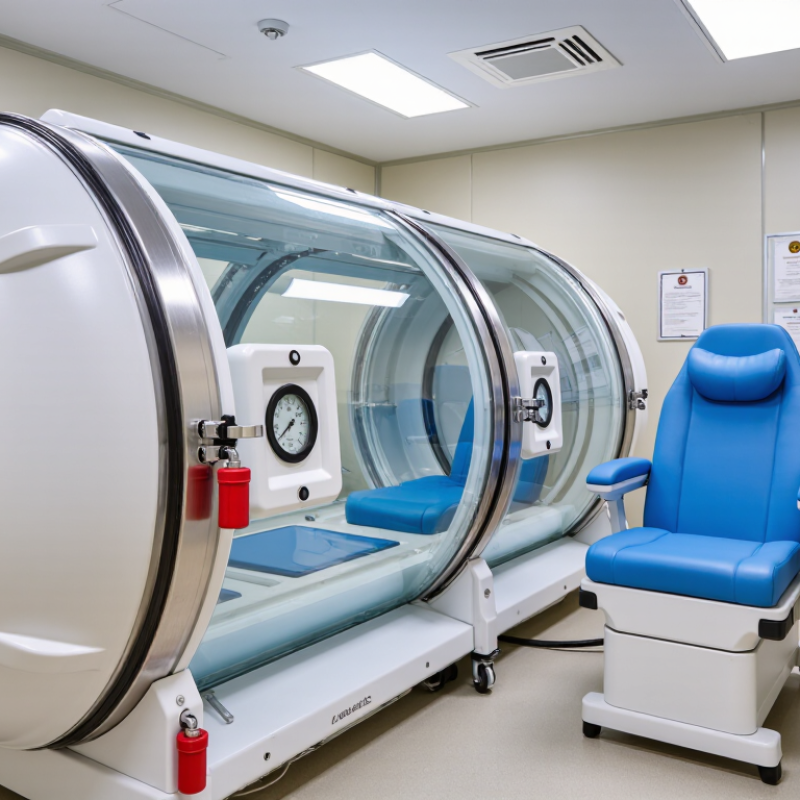
A soft-sided chamber may feel like a reinforced fabric capsule, with a transparent window, zipper, pressure gauge, and internal mattress. During a session, the ears may feel blocked, much like during an airplane descent. Slow pressurization can make this easier. A qualified operator should explain equalizing techniques, session limits, cleaning procedures, and emergency release steps. Fire safety deserves careful attention because oxygen-rich environments increase combustion risks.
When comparing a chamber for sale, check pressure accuracy, oxygen monitoring, ventilation, material testing, electrical safety, and service documentation. Ask whether trained technicians inspect the unit regularly. Users should also disclose lung conditions, ear problems, pregnancy, medications, or implanted devices to a licensed healthcare professional. Mild chambers are often marketed with broad wellness claims, but evidence does not support every promise. I would treat impressive testimonials as clues, not proof. Even a quiet session can carry overlooked risks when instructions are vague or maintenance is poor.
What Is a Mild Hyperbaric Chamber?
A mild hyperbaric chamber is designed to increase ambient pressure above normal atmospheric pressure while the user breathes air. Chamber pressure is commonly expressed in ATA, or atmospheres absolute: 1.0 ATA is normal sea-level atmospheric pressure. Mild hyperbaric systems are generally described as operating below approximately 1.5 ATA, although definitions and device specifications can vary.
The chart compares representative absolute-pressure levels. It is intended for general education; chamber selection and use should follow local regulations and qualified medical guidance.
How Mild Hyperbaric Chambers Work
China Best Mild Hyperbaric Chamber for Sale?
How Mild Hyperbaric Chambers Work
A mild hyperbaric chamber raises air pressure above normal sea-level pressure. Many systems operate near 1.3 ATA, or about 30% above standard atmospheric pressure. This compressed environment allows the user to breathe denser air. Oxygen then dissolves into plasma more readily, following Henry’s law. The effect is measurable, but it is not the same as hospital-grade hyperbaric oxygen therapy.
The Undersea and Hyperbaric Medical Society defines clinical hyperbaric oxygen therapy as treatment at 1.4 ATA or higher, usually with prescribed medical-grade oxygen. Mild chambers commonly use room air and lower pressures. That difference matters. Marketing claims can move faster than evidence. Current clinical literature does not support treating mild chambers as replacements for emergency or physician-supervised care.
Inside a well-designed chamber, a pressure gauge, relief valve, communication system, and emergency release should be easy to reach. The user may notice ear fullness, gentle popping, warmth, or temporary sound changes during compression. Equalizing slowly helps. It can still feel uncomfortable. The U.S. Food and Drug Administration repeatedly emphasizes fire prevention, electrical safety, ventilation, and trained supervision for hyperbaric equipment. Buyers should request pressure-testing records, material specifications, maintenance logs, and operator training documents. A low price from China is not automatically a good value. I would also question any seller promising guaranteed recovery, limitless daily use, or dramatic oxygen readings without independent testing.
Key Features to Compare Before Buying
When searching for the best mild hyperbaric chamber for sale in China, compare specifications before appearance. Mild systems usually operate below 1.5 ATA, while medical hyperbaric therapy commonly uses higher pressures. The UHMS clinical guidelines distinguish accepted treatment indications from general wellness use. That difference matters. A seller should state pressure limits, oxygen concentration, session duration, and intended use clearly. Vague claims deserve caution.
Check the chamber’s pressure gauge, emergency release, communication system, and internal temperature control. Transparent windows should resist repeated pressure cycles. Zippers, valves, and seams need documented testing. The U.S. FDA warns that oxygen-rich environments increase fire risk, so oxygen compatibility and ventilation are essential. Look for traceable quality records, electrical safety testing, and service instructions. ISO 13485 certification can support reliability, but it does not prove clinical effectiveness.
Market reports can provide context, not purchasing proof. Grand View Research’s 2024 hyperbaric oxygen therapy devices report projects continued market growth through 2030, driven partly by rehabilitation demand. Forecasts vary. That is the problem. Ask for test reports, maintenance intervals, warranty terms, and replacement-part availability. A quieter compressor may improve comfort, but noise data should come from measured testing. I would also check whether the chamber fits through your doorway. This practical detail is easy to miss. A low price may become expensive after shipping, installation, and repairs.
How to Choose the Best Chamber for Sale
Choosing the best mild hyperbaric chamber for sale requires more than comparing pressure ratings. In practice, check the working pressure, oxygen delivery method, chamber diameter, zipper quality, visibility, and emergency release. A cramped chamber may look efficient online. It can feel uncomfortable after thirty minutes.
The Undersea and Hyperbaric Medical Society distinguishes clinical hyperbaric therapy from lower-pressure wellness systems. Many mild chambers operate below 1.5 atmospheres absolute, so their evidence should not be confused with evidence for hospital-grade treatment. The U.S. Food and Drug Administration lists possible risks, including ear or sinus pain, temporary vision changes, and oxygen-related complications. Ask for pressure testing, electrical safety records, cleaning instructions, and a clear user manual. Good documentation matters.
A reliable seller should explain maintenance intervals and provide traceable quality records. ISO 13485 certification can indicate a structured medical-device quality system, although certification alone does not prove clinical effectiveness. Independent pressure testing is more useful than impressive advertising. I would also examine the pump noise, ventilation, heat buildup, and whether a trained operator can stop the session quickly. Small oversights become expensive later. The best choice is not always the chamber with the highest pressure; it is the system whose safety, comfort, service access, and intended use can be verified.