
Laminated Safety Glass is no longer a niche specification. It protects people in vehicle cabins, storefronts, skylights, and building façades, where broken pieces need to remain bonded to an interlayer. Buyers also face a less visible challenge: two products with similar thickness can differ in optical clarity, edge quality, adhesion, and consistency between production batches.
The market is expanding. Grand View Research estimated the global laminated glass market at USD 22.1 billion in 2022 and projected a 6.5% compound annual growth rate from 2023 to 2030. These figures signal demand, not a guarantee of supplier quality. The National Glass Association’s glazing guidance likewise underscores that performance depends on the complete glazing system, including glass, interlayer, framing, and installation. Details matter.
Structural-glass specialist Dr. James O’Callaghan’s work offers a useful principle: “Safety is a property of the complete assembly, not the glass pane alone.” Buyers should apply that thinking when comparing manufacturers. Ask for product-specific test documentation, traceable quality controls, interlayer options, and clear export packaging requirements. Then check whether the supplier can reproduce the same specification across repeat orders. A polished sample is not enough.
This guide compares seven manufacturers serving global buyers, with attention to product range, technical support, production capability, and export readiness. The ranking is a starting point, not a substitute for project-specific verification. Real procurement gets messy. A careful shortlist can still save costly rework.
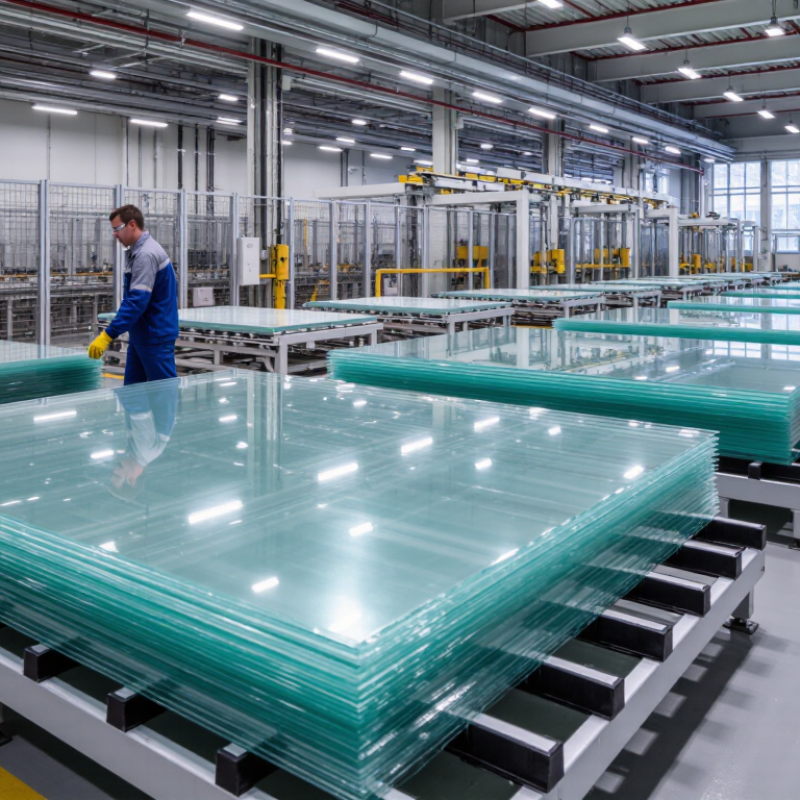
Laminated safety glass is made by bonding two or more glass sheets around a clear polymer interlayer, commonly polyvinyl butyral (PVB). Heat and pressure help the layers adhere during manufacturing. The National Glass Association’s Laminated Glazing Reference Manual lists common PVB interlayer thicknesses of 0.38, 0.76, and 1.52 millimeters. The right build depends on the application, not just the glass thickness.
When struck, the glass may crack, but the interlayer helps hold fragments in place and keeps the panel together. That matters. A cracked panel can still be hazardous, and laminated glass is not unbreakable. Its performance depends on glass type, interlayer design, edge support, and installation quality. A small exposed edge near a door frame, for example, can become a weak point if water or poor sealing damages the bond.
For building applications, ASTM E1300 provides a method for evaluating glass load resistance, while safety-glazing standards address impact performance. These are different questions: load capacity does not automatically prove human-impact safety. Buyers should ask for test documentation that matches the intended use, including the complete glass-and-interlayer assembly. One practical detail is often overlooked: specifications should identify both interlayer material and thickness, rather than simply saying “laminated glass.”
Laminated safety glass serves different roles across construction, transport, and public spaces. In buildings, it is used in overhead skylights, entrance doors, balustrades, and glass canopies, where falling fragments could injure people. The Global Alliance for Buildings and Construction reported that buildings and construction accounted for 32% of global energy use and 34% of energy-related CO₂ emissions in 2023. These figures make glazing choices relevant to broader building performance, though laminated glass alone cannot deliver energy savings. Specify the glass build-up, interlayer, and framing for the actual application. Details matter.
In vehicles, laminated glass is commonly used for windshields because its interlayer helps hold broken pieces together after impact. OICA reported global motor-vehicle production of about 93.5 million units in 2023, showing the scale of the sector that depends on reliable glazing supply. That number does not describe glass demand directly, but it gives buyers useful context. Rail cars, ships, and machinery may also use laminated glazing where impact resistance, noise control, or fragment retention is needed. A glass panel is only as dependable as its installation. Edge damage, poor handling, or an unsuitable specification can weaken performance, so application testing and clear technical documentation deserve attention.
Evaluating laminated safety glass manufacturers for global supply starts with the product, not the brochure. Check glass thickness, interlayer type, edge finish, and permitted size tolerances against the project drawings. Ask how each production batch is identified and whether inspection records can be traced to it. Details matter. Request current test documentation for the specified glass build-up, and confirm what the results actually cover. A test for one thickness may not represent another.
Production reliability deserves equal attention. Ask about monthly capacity, normal lead times, and how the manufacturer handles urgent changes without skipping quality checks. Review sample pieces for haze, bubbles, edge damage, and optical distortion under consistent lighting. Ask for evidence. A video call can show a factory floor, but it cannot replace a site audit or independent inspection when the project risk warrants one.
For international shipments, inspect crate design, moisture protection, labeling, and loading procedures. Clarify who reports transit damage and how claims are documented. Compare quotations line by line, including packing, inspection, and delivery terms; the lowest unit price can hide costly gaps.
I would also ask for a small trial order before committing to a large shipment. It may slow the schedule, and it will not reveal every weakness, but it gives buyers a practical chance to test communication and consistency.
Global buyers comparing seven leading laminated safety glass manufacturers should assess tested performance, production consistency, and export support—not just price. The World Health Organization’s Global Status Report on Road Safety 2023 estimates 1.19 million road deaths annually. That figure is not evidence of glass performance, but it underscores why safety claims need careful verification. For vehicle glazing, UNECE Regulation No. 43 sets requirements for safety glazing materials and installation.
Ask each shortlisted manufacturer for test reports covering the exact glass build-up, thickness, interlayer, and intended use. Check whether certificates match the product being quoted; a similar sample is not enough. For architectural projects, review impact classification, edge quality, optical distortion, and packaging for long-distance shipping. Confirm lead times and replacement procedures in writing. One awkward point: even a strong specification can fail if handling or installation is poor.
Tips: Request a recent production sample and inspect its edges in daylight. Compare independent test records, not only sales sheets. Check crate dimensions, moisture protection, and breakage terms before shipment. A small gap in documentation is worth questioning.
Anonymous buyer-comparison framework. No company-specific capabilities or rankings are asserted; confirm each supplier’s products, certifications, and delivery terms directly.
| Supplier Profile | Standards to Check | Product and Interlayer Options | Buyer Verification Point |
|---|---|---|---|
| 1. Architectural glazing supplier | Ask for applicable test documentation, such as EN 14449 and relevant impact-classification results. | Confirm available glass make-ups, interlayer types, colors, and finish options. | Check project-specific sizes, tolerances, edgework, and technical submittals. |
| 2. Building-envelope glazing supplier | Request evidence for the standards and building-code requirements applicable at the installation location. | Clarify whether laminated units can be supplied as part of an insulated-glass assembly. | Verify compatibility with the facade system and project performance specifications. |
| 3. Safety-glazing specialist | For U.S. projects, check relevant requirements such as ANSI Z97.1 and CPSC 16 CFR Part 1201. | Confirm the tested glass construction and intended impact-safety application. | Match certificates and test reports to the exact product configuration being quoted. |
| 4. Automotive-glazing supplier | Check the vehicle-market regulations and approval requirements relevant to the intended use. | Ask whether the supplier supports the required curved shapes, coatings, and optical specifications. | Verify tooling, sample approval, traceability, and production qualification arrangements. |
| 5. Security-glazing supplier | Request test evidence for the specified threat or performance level; do not infer performance from thickness alone. | Confirm the proposed glass and interlayer build-up for the project’s stated security objective. | Ensure test reports cover the proposed construction, dimensions, and installation conditions. |
| 6. Decorative or specialty-glass supplier | Check applicable safety-glazing standards alongside project requirements for appearance and durability. | Discuss printed, tinted, colored, or other specialty interlayer options and request samples. | Approve color, visual quality, and sample tolerances before placing a production order. |
| 7. Export-oriented glass supplier | Confirm that documentation meets the destination market’s applicable product and import requirements. | Request a written specification covering glass composition, dimensions, processing, and packing. | Agree on lead time, protective packaging, shipping terms, and responsibility for transit damage. |
Standards and approvals depend on the product, application, and destination market. Request current certificates and test reports for the exact quoted construction.
A strong laminated safety glass supplier should prove more than production capacity. Compare glass thickness ranges, interlayer options, maximum panel sizes, edge quality, and documented testing. Ask how the factory controls bubbles, inclusions, and alignment; these details affect clarity and consistency. A polished brochure is useful, but it cannot replace recent inspection records.
Check whether product documentation references relevant standards, such as EN 14449 and the EN ISO 12543 series, or ASTM C1172 for architectural laminated glass. Confirm the scope, test method, and issuing body rather than treating a certificate as universal approval. Export support matters too: UNCTAD’s Review of Maritime Transport 2024 reports that over 80% of global trade by volume moves by sea. Ask for export packing specifications, crate photos, moisture protection, shipping documents, and a clear process for handling breakage claims. Even experienced suppliers can miss a detail.
Tips: Request a sample label, test report, and packing checklist before ordering. Compare lead times in writing, including production, inspection, and port handling. Then verify that the quoted specification matches the glass arriving on site.
Comparing Manufacturer Capabilities, Certifications, and Export Support
Standards-scope reference for evaluating suppliers—not manufacturer ratings. A value of 1 means the standard directly addresses that area; 0 means it is not its primary scope. Confirm applicable standards, test reports, certifications, and export documentation for each destination market.