2026 Top Modular Container House Manufacturers?
The 2026 search for top Modular Container House manufacturers reflects a changing construction market. Buyers now expect faster installation, clearer pricing, and dependable thermal performance. A finished unit should feel like a real home, not a steel box placed on a site.
McKinsey & Company reported that modular construction could capture significant value through factory production, standardized design, and reduced on-site labor. Its 2019 analysis suggested that modular methods might unlock more than $100 billion in annual value across major construction sectors. Grand View Research also identifies modular construction as a growing global market, supported by housing shortages, urbanization, and demand for efficient building systems. These findings support stronger interest in container-based housing, although market forecasts differ by region and definition.
A reliable manufacturer must offer more than attractive photographs. Its factory should demonstrate welding quality, corrosion protection, insulation thickness, electrical testing, plumbing checks, and documented delivery experience. I have found that small details matter: a poorly sealed window can cause condensation, while an undersized air-conditioning system can make a compact room uncomfortable. Not every supplier publishes enough evidence.
This guide compares leading manufacturers through product quality, customization, certifications, production capacity, warranty terms, logistics support, and after-sales service. It also considers whether each company can adapt designs to local climate requirements and building regulations. Rankings are useful, but they are not absolute. A low-cost supplier may suit a temporary project, while a certified manufacturer may better serve schools, resorts, offices, or permanent housing. Buyers should verify factory records, inspect technical drawings, and request recent project references before signing. The strongest choice is not always the largest company.
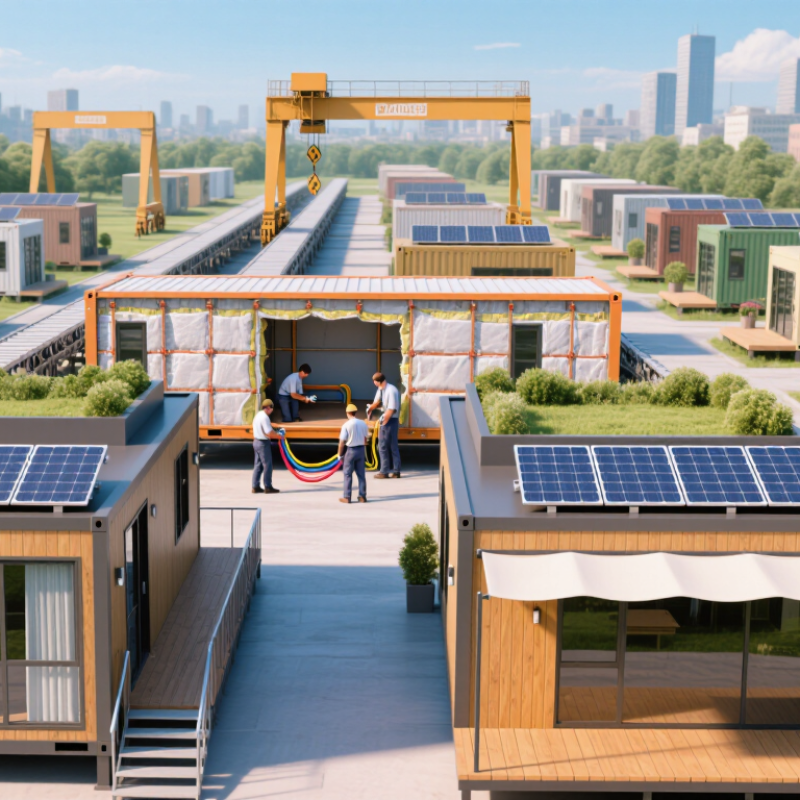
What Defines a Leading Modular Container House Manufacturer in 2026?
2026 Top Modular Container House Manufacturers?
What Defines a Leading Modular Container House Manufacturer in 2026?
A leading manufacturer does more than stack steel boxes. It proves how each module performs before delivery. Engineers should provide structural calculations, fire ratings, insulation values, and local code documentation. Clear records matter.
Factory experience is visible in small details. Welds should be inspected and recorded. Floor levels must stay consistent across connected units. Windows need tested seals, not just attractive frames. A reliable production team also builds a full-scale sample room before mass production. This exposes awkward doors, weak storage, and poor ventilation early.
Good design feels practical.
In 2026, strong manufacturers use digital models to coordinate plumbing, electrical routes, and lifting points. They explain transport limits, foundation needs, installation time, and future maintenance in plain language. Energy performance deserves close attention, especially in homes using heat pumps, solar systems, or high-efficiency insulation. However, technology alone proves little. A complex control system may become expensive when a simple component fails.
Transparency separates serious suppliers from fast sellers. Buyers should receive a detailed cost schedule, material specifications, warranty terms, and inspection photos. After-sales support should include replacement parts and technical guidance, not vague promises. No factory gets everything right. Some designs still prioritize appearance over repair access, and project schedules can slip during shipping. A careful manufacturer admits these risks and offers workable adjustments before production begins.
Key Technologies and Construction Methods Used by Top Manufacturers
2026 Top Modular Container House Manufacturers: Key Technologies and Construction Methods
Top modular container house manufacturers now compete through engineering, not painted steel boxes. McKinsey reports that modular construction can reduce project schedules by 20–50%. Factory production makes that advantage measurable. Workers cut panels indoors, weld frames on jigs, and install wiring before delivery. Digital twins help detect clashes between plumbing, insulation, and structural steel. Yet software cannot replace careful site measurements.
High-performing factories use automated CNC cutting, robotic welding, and calibrated torque tools. These methods improve repeatability across stacked modules. Structural checks should follow local wind, snow, seismic, and fire requirements. The International Energy Agency reports that buildings account for about 30% of global energy demand. Therefore, manufacturers increasingly combine mineral wool, airtight membranes, thermal bridges control, and heat-pump systems. Small gaps still matter.
Construction usually follows a controlled sequence: survey, foundation preparation, factory assembly, transport, craning, and weatherproof joining. Dodge Data and Analytics found that many contractors using prefabrication reported better schedule performance. Site logistics remain a weak point, especially on narrow urban roads. A manufacturer may produce excellent modules yet lose time through poor lifting plans. Independent inspections, moisture testing, and commissioning records make performance more trustworthy. Some designs still look industrial. That is worth acknowledging.
2026 Top Modular Container House Manufacturers: Key Technologies and Construction Methods
Comparison of commonly reported modular construction methods using typical off-site completion rates. Higher values indicate that more fabrication, assembly, and quality inspection can be completed in a controlled factory environment before transportation to the site.
Note: Values represent typical industry ranges summarized as midpoint estimates for standardized modular housing projects; actual results vary by design complexity, local regulations, transport limits, and site conditions.
Regional Manufacturing Strengths and Global Supply Capabilities
2026 Top Modular Container House Manufacturers: Regional Manufacturing Strengths and Global Supply Capabilities
Regional strength matters more than factory size when selecting a modular container house manufacturer. East and Southeast Asian plants often provide dense supplier networks, automated welding, and competitive steel purchasing. Europe generally leads in insulation design, energy performance, and strict factory documentation. North American manufacturers usually understand local permitting, structural loads, and utility connections better. These differences affect real project outcomes.
McKinsey’s 2019 report, Modular Construction: From Projects to Products, found that modular methods can reduce construction schedules by 20–50% and project costs by up to 20%. However, those gains depend on stable production and accurate site preparation. A well-built module cannot compensate for an unsuitable foundation.
Grand View Research reported that the global modular construction market reached approximately USD 91.36 billion in 2023, showing strong international demand beyond temporary housing.
Global supply capability requires more than export experience. Buyers should verify container loading plans, moisture protection, spare-part availability, and installation manuals. The World Bank’s Logistics Performance Index 2023 highlights customs, infrastructure, logistics services, and delivery reliability as key supply-chain factors. Port access helps. So does a nearby service team.
One overlooked detail is regional climate testing. A coastal project may need stronger corrosion protection, while a cold region requires careful thermal-bridge control. Factory photos look impressive, but independent inspections remain necessary. Even experienced suppliers sometimes underestimate local approvals, and that mistake can delay an otherwise efficient project.